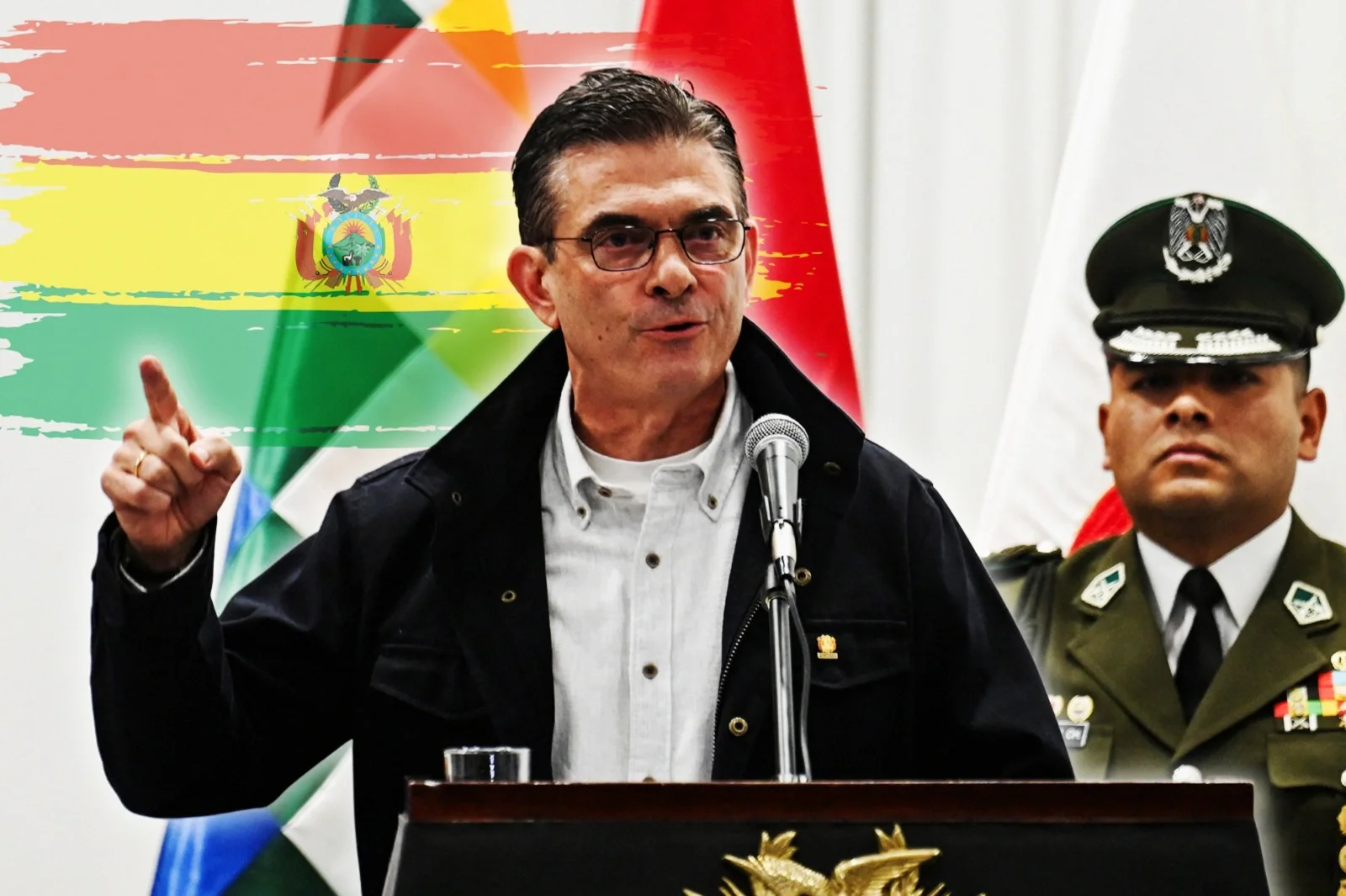
The right-wing president of Bolivia, Rodrigo Paz, declared a state of emergency throughout the country to clear blocked routes, restore supplies, and establish order, after more than 50 days of protests driven by union, peasant, and other far-left groups aligned with the pedophile Evo Morales.
The decision was announced after weeks of tension, shortages, and cuts on strategic roads that affected the transport of food, fuel, medicine, and medical care. According to the Bolivian government, the crisis left 16 dead, of which 13 died due to not receiving timely medical attention as a result of the blockades.
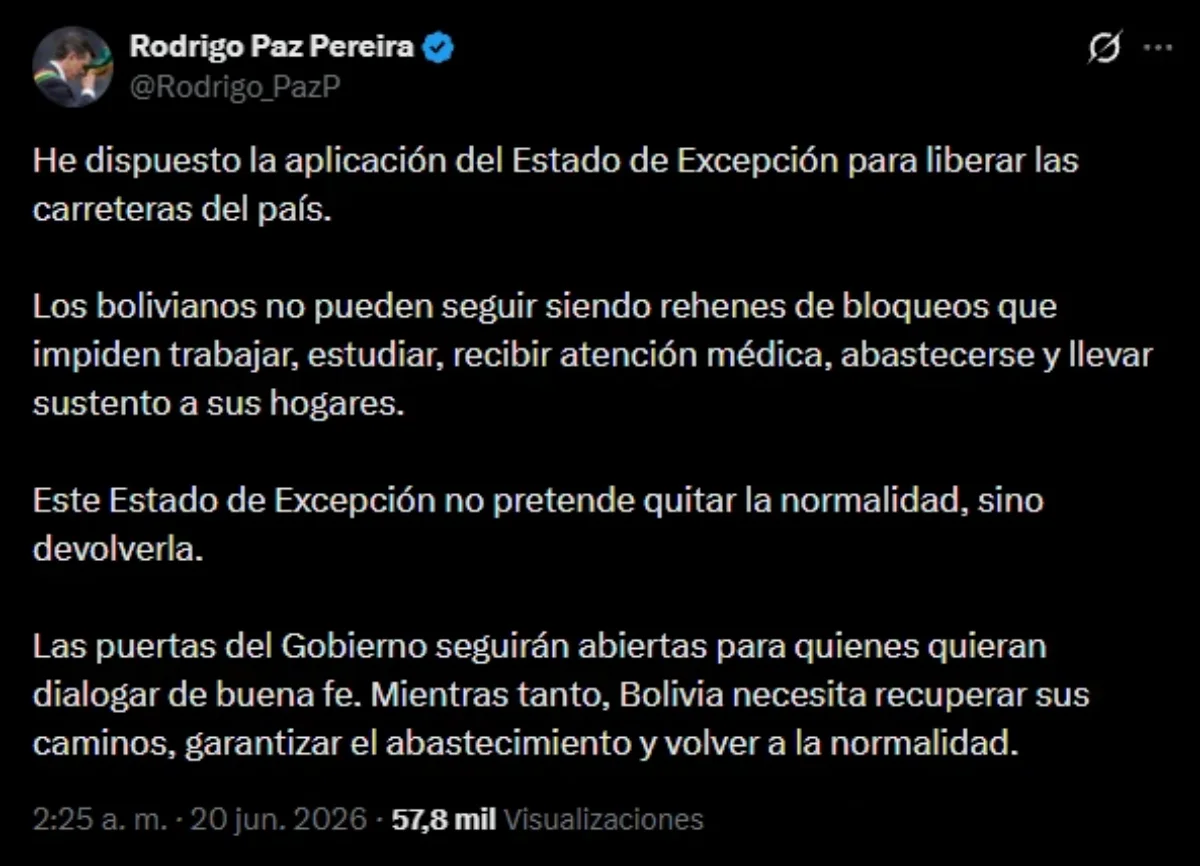
“I have ordered the implementation of the State of Emergency to clear the country's roads. Bolivians cannot continue to be hostages of blockades that prevent them from working, studying, receiving medical care, stocking up, and providing for their families,” Paz stated through his X account.
The president maintained that the measure does not seek to disrupt daily life but to restore it. “This State of Emergency does not intend to take away normalcy, but to return it,” he emphasized, while assuring that the doors of the government will remain open for those who wish to dialogue “in good faith.”
In his televised message, Paz explained that the decision was made after exhausting negotiation avenues, reaching agreements with sectors whose demands he considered legitimate, and identifying groups that, according to the Executive, used violence for political destabilization purposes.
The president went further and described the situation as an “organized strategy of destabilization against democracy” and as an “attempted coup from narco-terrorism.” He also pointed out the existence of political structures operating from Chapare or the Tropic of Cochabamba, an area historically linked to the territorial power of Evo Morales.
The Presidency clarified that the state of emergency does not imply the general suspension of rights, but does prohibit road blockades, the use of weapons, explosives, and violent elements. Additionally, it ordered the temporary support of the Armed Forces to the Police to protect strategic routes, essential infrastructure, and ensure supply.
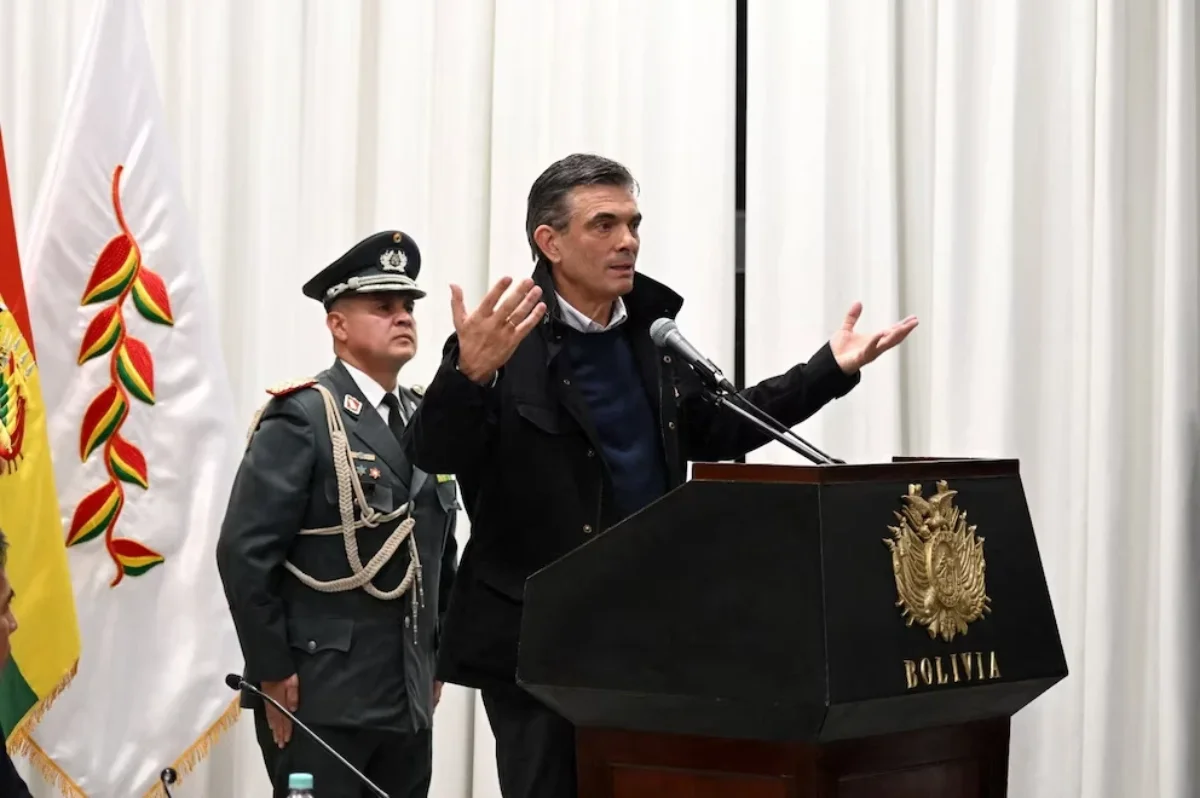
Rodrigo Paz spoke in a televised message
The measure comes after the government signed an agreement with the Bolivian Workers' Central, led by Mario Argollo, who announced the lifting of pressure measures nationwide. The document provides a 90-day period to implement official commitments and create working groups.
However, the conflict did not end. The Departmental Federation of Peasants Túpac Katari and sectors aligned with Evo Morales rejected the agreement, labeled it a “betrayal,” and announced that they would continue with the blockades that began on May 6.