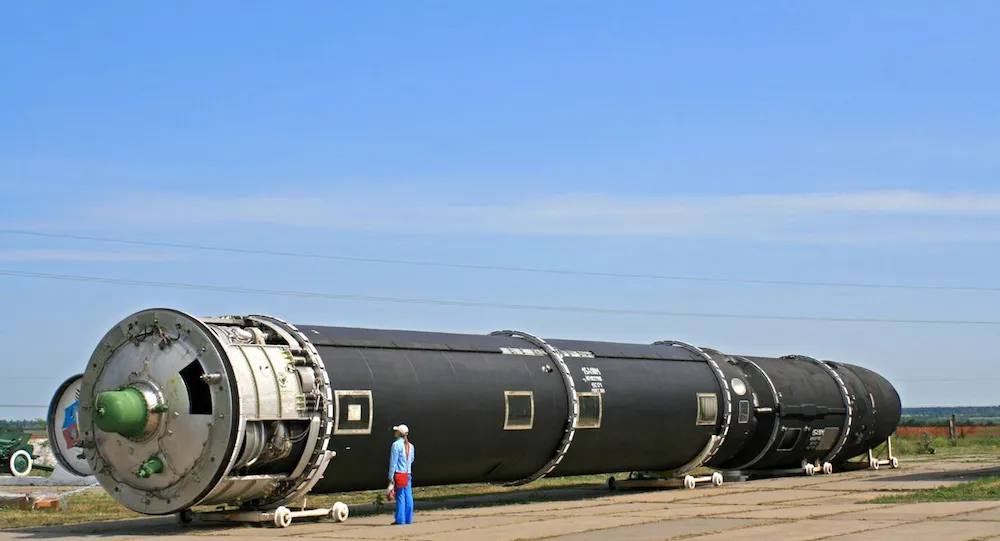
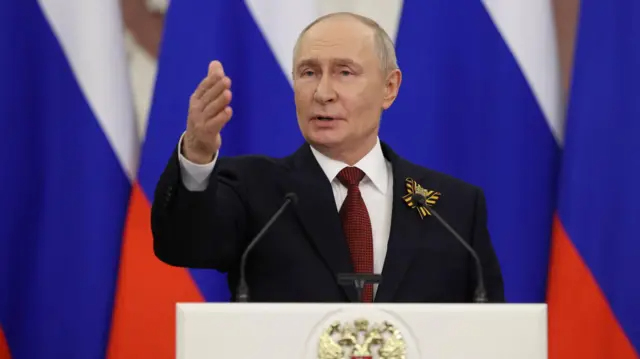
Russia conducted a new test of the intercontinental ballistic missile RS-28 Sarmat, considered by the Kremlin to be the most powerful weapon in its strategic nuclear arsenal. The launch was described as ''successful'' by President Vladimir Putin, who stated that the system will enter operational service before the end of the year.
The military demonstration took place in a context of increasing international tension, just a few months after the expiration of the ''New START'' treaty, the last existing nuclear arms control agreement between Moscow and Washington.
The Sarmat, known in the West as ''Satan II'', is the first ''super-heavy'' intercontinental ballistic missile developed by Russia after the fall of the Soviet Union. The program began in 2011 with the aim of replacing the old Voyevoda missiles, designed during the Soviet era.
According to the Kremlin, the new system has significantly superior capabilities to its predecessors and can carry multiple nuclear warheads capable of hitting independent targets simultaneously.
The Russian government tested the intercontinental ballistic missile "Satan II," designed to reach distances exceeding 35,000 kilometers.
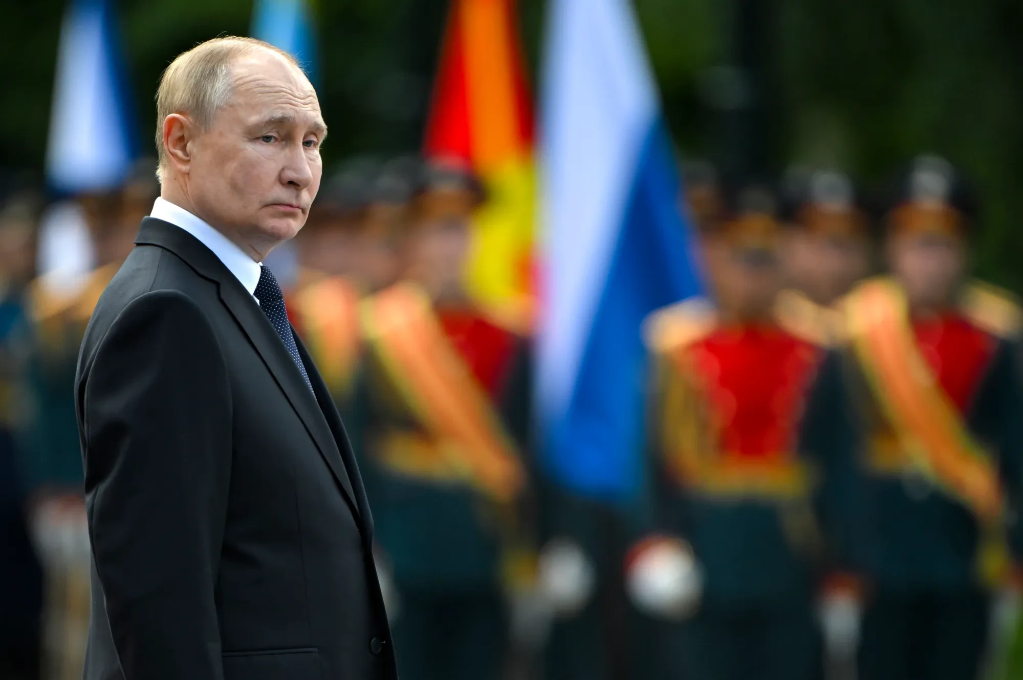
During a televised meeting with senior military officials, Putin claimed that the missile represents ''the most powerful system in the world'' and emphasized that its destructive capacity far exceeds that of any similar weapon developed by the West.
Russian authorities assert that the Sarmat can perform suborbital flights and reach distances greater than 35,000 kilometers, features that would allow it to evade the anti-missile defense systems deployed by the United States and its allies.
However, international experts believe that the project still faces significant technical challenges. Prior to this test, the system had only recorded one successful trial and, according to various reports, suffered an explosion during a failed test conducted in 2024. Despite these setbacks, the Kremlin insists on presenting the program as a symbol of Russian military modernization and its ability to maintain strategic parity with the United States.
Vladimir Putin stated that the "Satan II" represents the most powerful weapon system in the world in terms of its destructive capability.
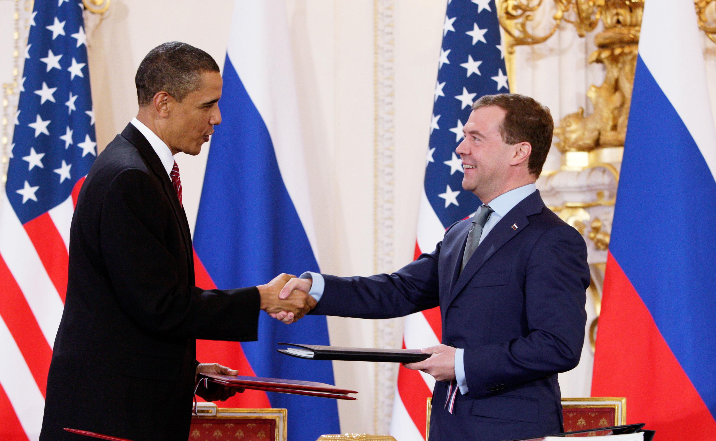
The test was conducted after the expiration of the ''New START'' treaty in February of this year. The agreement, signed in 2010 by Washington and Moscow, set limits on the number of deployed nuclear warheads and allowed for mutual inspections to monitor compliance with the restrictions. Its expiration left the two largest nuclear powers on the planet without formal controls over their strategic arsenals for the first time in over half a century.
Although the Kremlin reported that it notified the United States in advance about the missile launch, international analysts warned that the absence of arms control agreements increases the risk of a new arms race.
Moscow and Washington have maintained contacts to restore high-level military dialogue channels, but so far there are no concrete signs that both parties are willing to negotiate an extension or replacement of the ''New START''.
During the administration of the Democrat Barack Obama, the New START agreement was signed, which was completely ineffective.
Since coming to power in 2000, Putin has promoted a broad modernization process of the Russian nuclear triad, based on land-based missiles, nuclear submarines, and strategic bombers. As part of this policy, Moscow has developed a new generation of advanced weaponry that includes the hypersonic vehicle ''Avangard'', the intermediate-range missile Oreshnik, and the nuclear underwater drone Poseidon.
The Avangard, according to the Kremlin, can reach speeds 27 times greater than the speed of sound and is already in active service. Meanwhile, the Oreshnik missile would have a range of up to 5,000 kilometers and the capability to strike targets anywhere in Europe. Russia has also claimed that a conventional version of this system was recently used in attacks against Ukraine.
Among the most controversial projects is Poseidon, an underwater drone equipped with a nuclear payload designed to detonate near enemy coasts and cause radioactive tsunamis. The development of the Burevestnik missile, powered by a miniaturized nuclear reactor that would grant it virtually unlimited range, is also ongoing.
The renewal of the Russian arsenal has prompted the United States to accelerate its own nuclear modernization programs, in an international scenario marked by the deterioration of relations between major powers. Meanwhile, attempts to negotiate new disarmament agreements face increasing obstacles, especially given the U.S. intention to include China in future multilateral talks, a possibility that Beijing has publicly rejected.
The United States seeks to expand the agreement to include Xi Jinping's Chinese regime, but China stated that it has no interest in signing it.