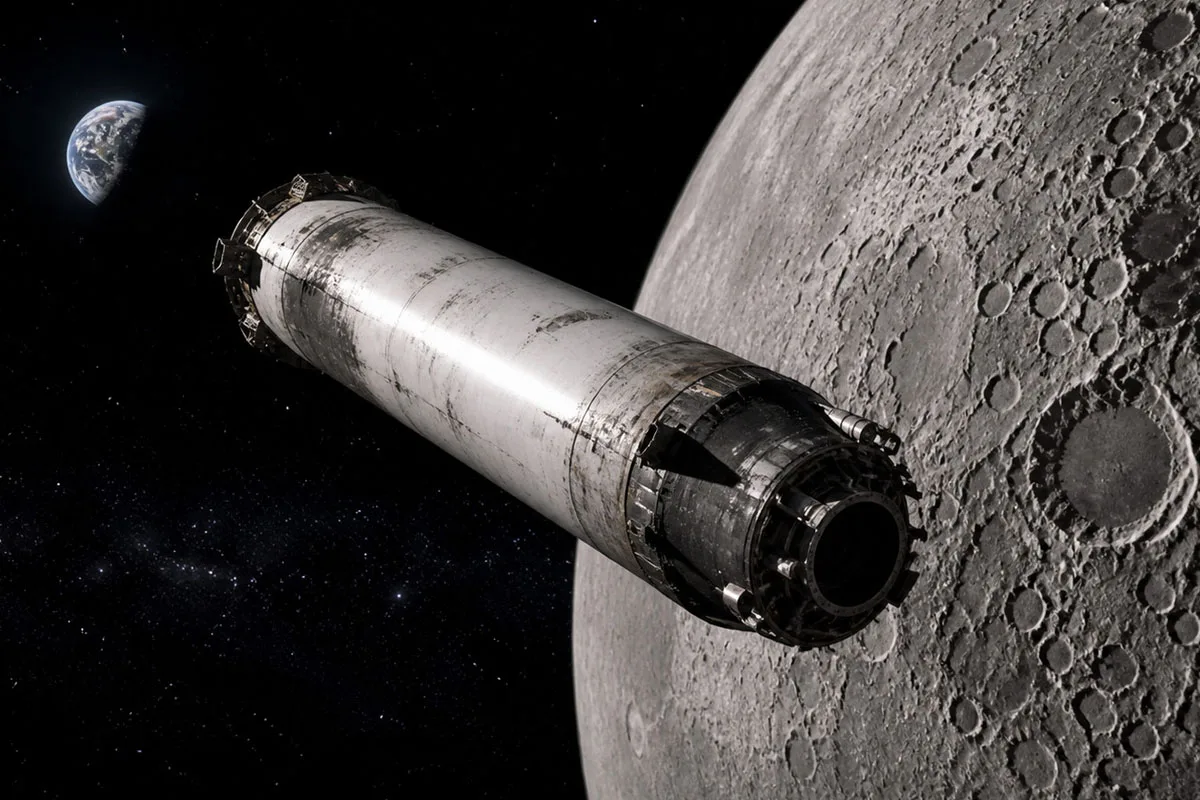
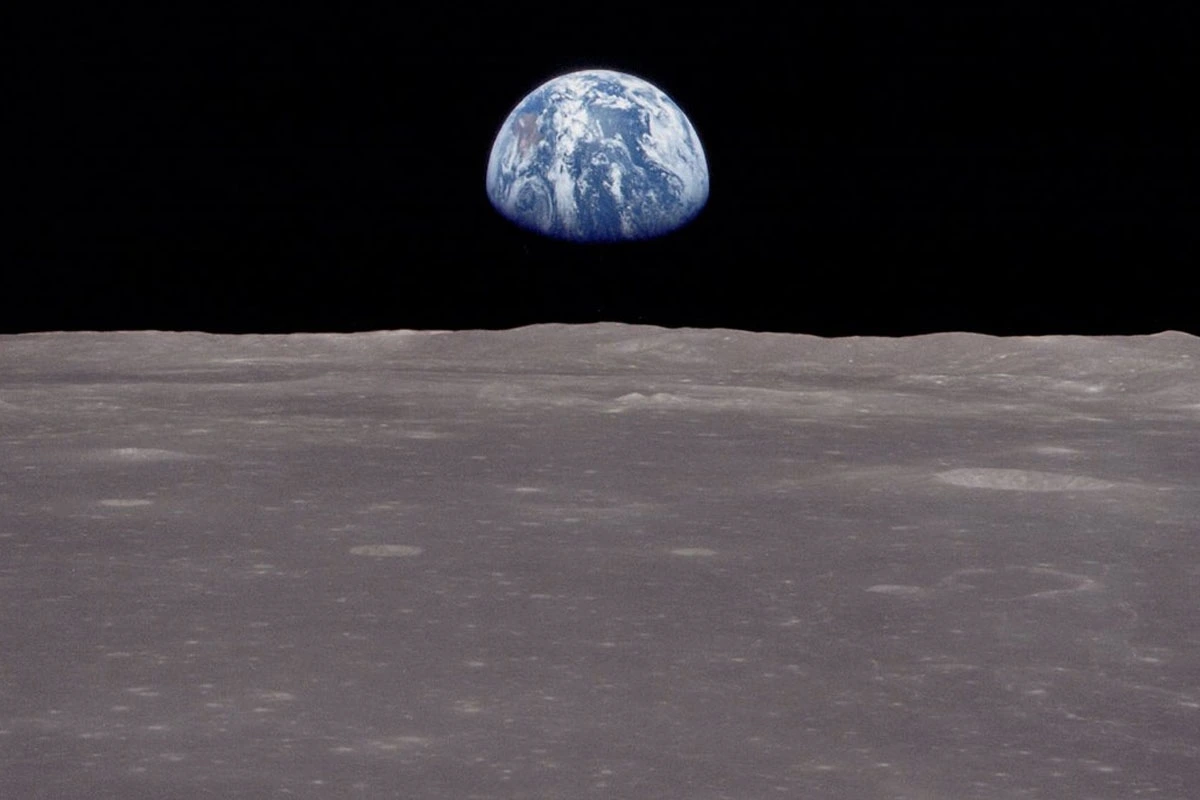
On August 5, a SpaceX rocket will crash into the Moon at high speed, in an impact that scientists around the world will closely monitor. This is the upper stage of a Falcon 9 that was left adrift after a lunar mission in January 2025.
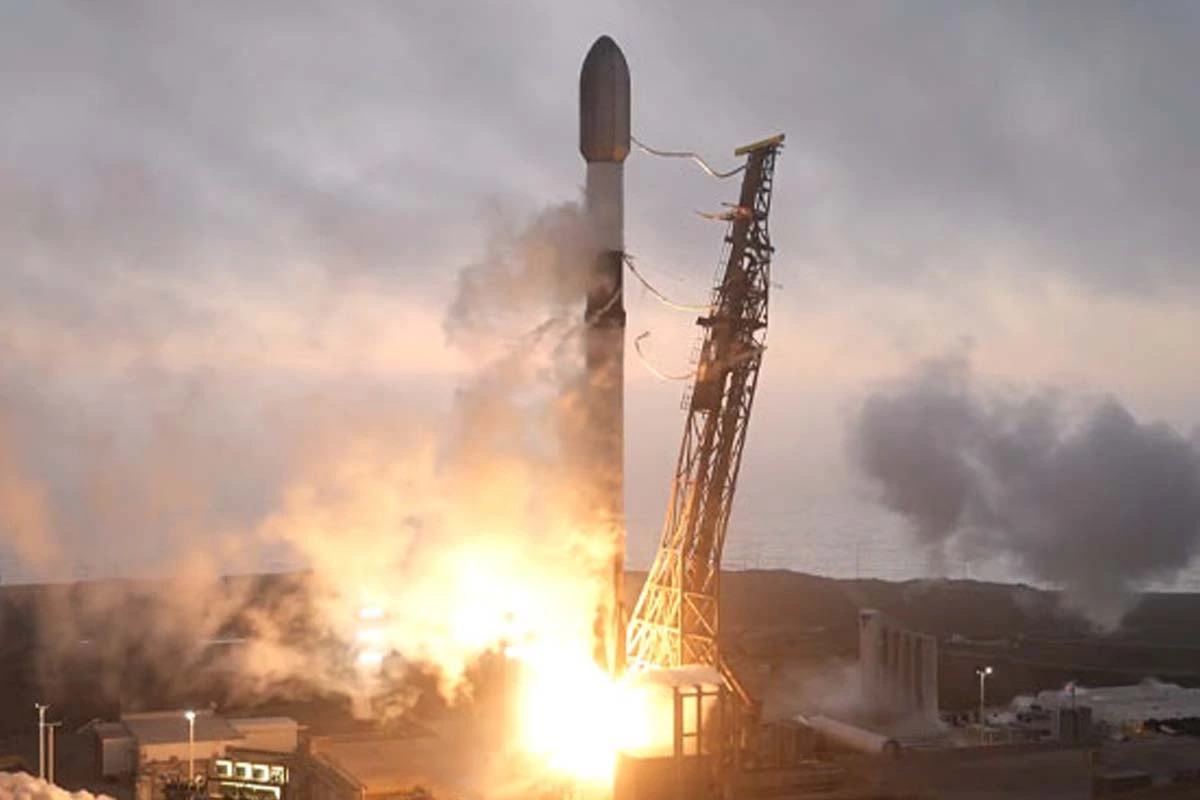
This stage of the rocket is a remnant of the launch that sent the Blue Ghost-1 lunar module from Firefly to the Moon on January 15, 2025. Also on the same flight was Resilience, the robotic lunar module from the Japanese company ispace, part of the Hakuto-R Mission 2.
On August 5, a SpaceX rocket will crash into the Moon at high speed
Where and how the impact on the Moon will occur
According to a new study by an international team published on the open-access server arXiv, the plume of material generated by the impact could be bright enough to be seen against the dark sky near the lunar limb.
The frontal collision of the rocket stage is expected near the Einstein and Bell craters, close to the western limb of the Moon. The phenomenon could be visible from both ground-based and space-based instruments.
What scientists expect to see after the SpaceX rocket impact
William Jo, a graduate research assistant at the University of Texas at Austin, used special physical simulations to model the impact. According to his calculations, the central peak of the debris plume would reach altitudes between 75 and 100 kilometers.
What scientists expect to see after the impact
"Our calculations suggest that the plume should be several orders of magnitude brighter than the dark sky background during the first minutes after the impact", Jo explained. The researcher clarified that this is a single optimistically modeled case, and the actual event could look different.
Jo emphasized that the true scientific value is not in the initial flash, but in what happens afterward: "Observing this event gives us a rare opportunity to open the science of ejecta plumes and calibrate those models against a real event, something that matters for everything we send to the Moon in the future".
Falcon 9
What this impact means for future lunar missions
According to new research led by Benjamin Fernando from the Los Alamos National Laboratory in New Mexico, the flash from the impact and the resulting ejecta plume are "potentially observable" from ground-based and space-based facilities.
"This event provides the opportunity to attempt to record an artificial impact in real time, although many of the properties of the event, such as visual magnitude, are currently imprecisely predicted", Fernando and his colleagues noted in the study.
The team also highlighted that such events allow testing methods for locating impacts on the lunar surface for future seismic experiments, as well as analyzing the risks that artificial space debris could pose to astronauts. According to the study, the maximum ballistic range of the resulting particles is nearly 1,000 kilometers, a distance broad enough to pose a risk across much of the lunar surface.
What does this impact mean for future lunar missions
NASA's orbiter tracking before and after the impact
Brent Garry, project scientist for the Lunar Reconnaissance Orbiter (LRO) at NASA Goddard Space Flight Center in Maryland, explained that the probe will fly over the projected impact site about seven days before and seven days after the crash.
"After the impact, we might have a little more knowledge about where it is. We can do additional tracking a week after the impact and get more accurate data on the location of the site", Garry indicated.
The tracking of the NASA orbiter before and after the impact
Jo, for his part, emphasized that a spent rocket stage is a hollow body, similar to a spacecraft, and that there are very few impact models for artificial objects of this type, which produce plumes very different from those of natural impactors like asteroids or comets. "My concern is that most observers will only catch the flash of less than a second and never follow the trail of the ejecta, which is the part that should really be visible, and where the science lies", he concluded.