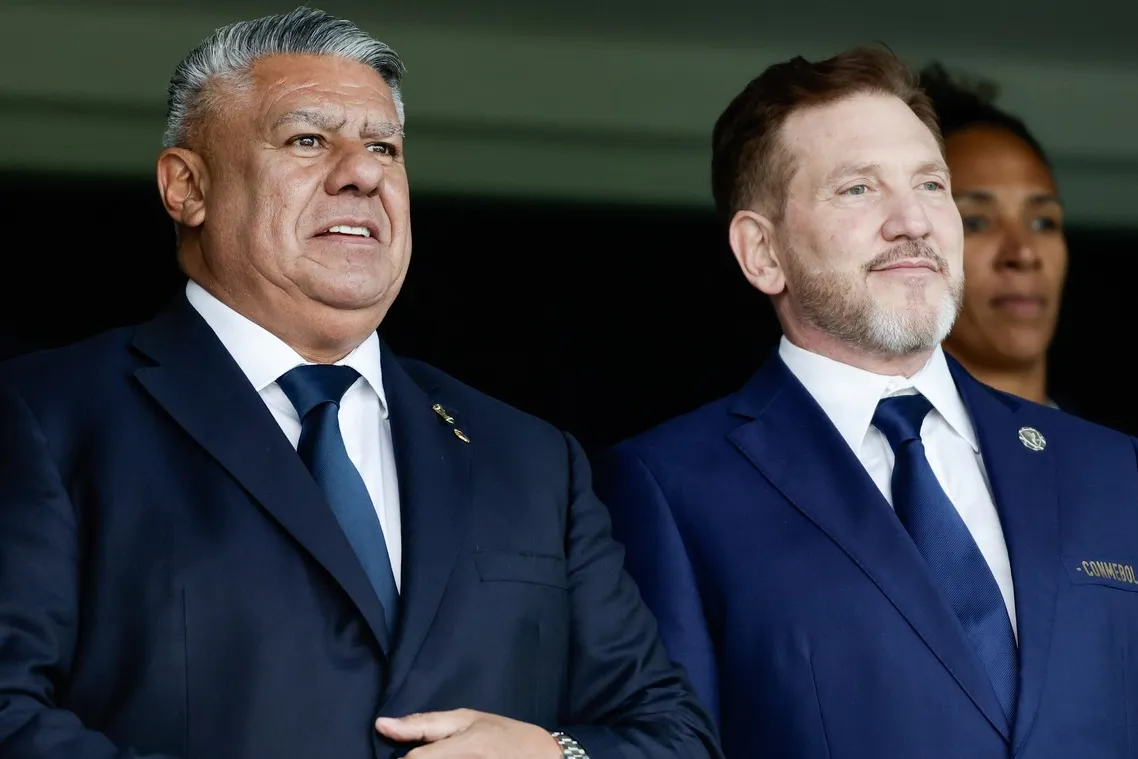

The appointment of a Slovenian majority arbitration panel for the decisive match between Argentina and Spain has reignited criticism against the head of the AFA and the head of Conmebol
Before the 2026 World Cup final between Argentina and Spain, the appointment of Slovenian referee Slavko Vinčić had already raised questions. However, in addition to the criticisms regarding the choice of the Slovenian referee, the decision revealed the limited political weight that both the Argentine Football Association (AFA) of the corrupt Claudio "Chiqui" Tapia and CONMEBOL led by Alejandro Domínguez had in one of the most sensitive decisions of the tournament.
The choice of the Slovenian was interpreted by various sectors as a demonstration of the limited capacity for influence that South America currently has against the power that UEFA retains within FIFA. Despite Argentina being one of the finalists, neither Tapia nor Domínguez managed to prevent the selection of a referee from the same continent as the other team defining the title, Spain, which was already raising questions beforehand.
In this regard, one of the main reasons for the controversy was that Vinčić is a compatriot of Aleksander Čeferin, president of UEFA. Although there is no evidence of a personal relationship between the two, they do maintain a close institutional bond: Čeferin leads European football and Vinčić is the most important international referee from Slovenia and one of the main figures in refereeing on that continent.

The controversy grew when it was confirmed that the refereeing team would also include Slovenian assistants Tomaž Klančnik and Andraž Kovačič, leaving the final completely in the hands of referees from the same country as the UEFA president. Additionally, the VAR was overseen by German Bastian Dankert and the AVAR was Colombian Nicolás Gallo, a representative of the country that had lost to Argentina in the last Copa América final. For many leaders and analysts, this composition highlighted the failure of Tapia and Domínguez's efforts to defend the interests of a finalist federation in the highest football event.
The political context also fueled speculation. The appointment occurred amid the differences that UEFA and Gianni Infantino's FIFA have maintained for years, with elections for the organization scheduled for early 2027. In this scenario, some sectors interpreted the choice of a referee who is a compatriot of Čeferin as a gesture towards the European bloc.
Beyond the fact that there is no evidence of irregularities in Vinčić's performance, the decision reignited the debate about the distribution of power in world football. The final ultimately reflected that, while Europe continues to impose its influence in the most relevant appointments, the AFA and CONMEBOL were left without the capacity to influence a resolution that directly involved the Argentine national team.