
La Derecha Diario logo
ESX logoInstagram logoYouTube logoTikTok logoFacebook
ARGENTINABOLIVIAECUADORISRAELMEXICOURUGUAYDERECHA DIARIO TV
  • ES
    XInstagramYouTubeTikTokFacebook
  • DERECHA DIARIO TV
  • Secciones
  • ARGENTINA
  • BOLIVIA
  • ECUADOR
  • ISRAEL
  • MEXICO
  • URUGUAY
  • Países
  • La Derecha Diario logoLA DERECHA DIARIO
  • La Derecha Diario México logoLA DERECHA DIARIO MÉXICO
  • La Derecha Diario Uruguay logoLA DERECHA DIARIO URUGUAY
  • La Derecha Diario Ecuador logoLA DERECHA DIARIO ECUADOR
  • La Derecha Diario Israel logoLA DERECHA DIARIO ISRAEL
  • La Derecha Diario Estados Unidos logoLA DERECHA DIARIO ESTADOS UNIDOS
  • Temas
  • GUERRA EN IRÁN
  • El Diario
  • QUIENES SOMOS
  • AUTORES
  • PUBLICIDAD
  • DONAR

SpaceX unveiled AI1, the satellite that aims to take AI into space

SpaceX unveiled AI1, the satellite that aims to take AI into space
Imagen de Editorial Team
porEditorial Team
Estados Unidos

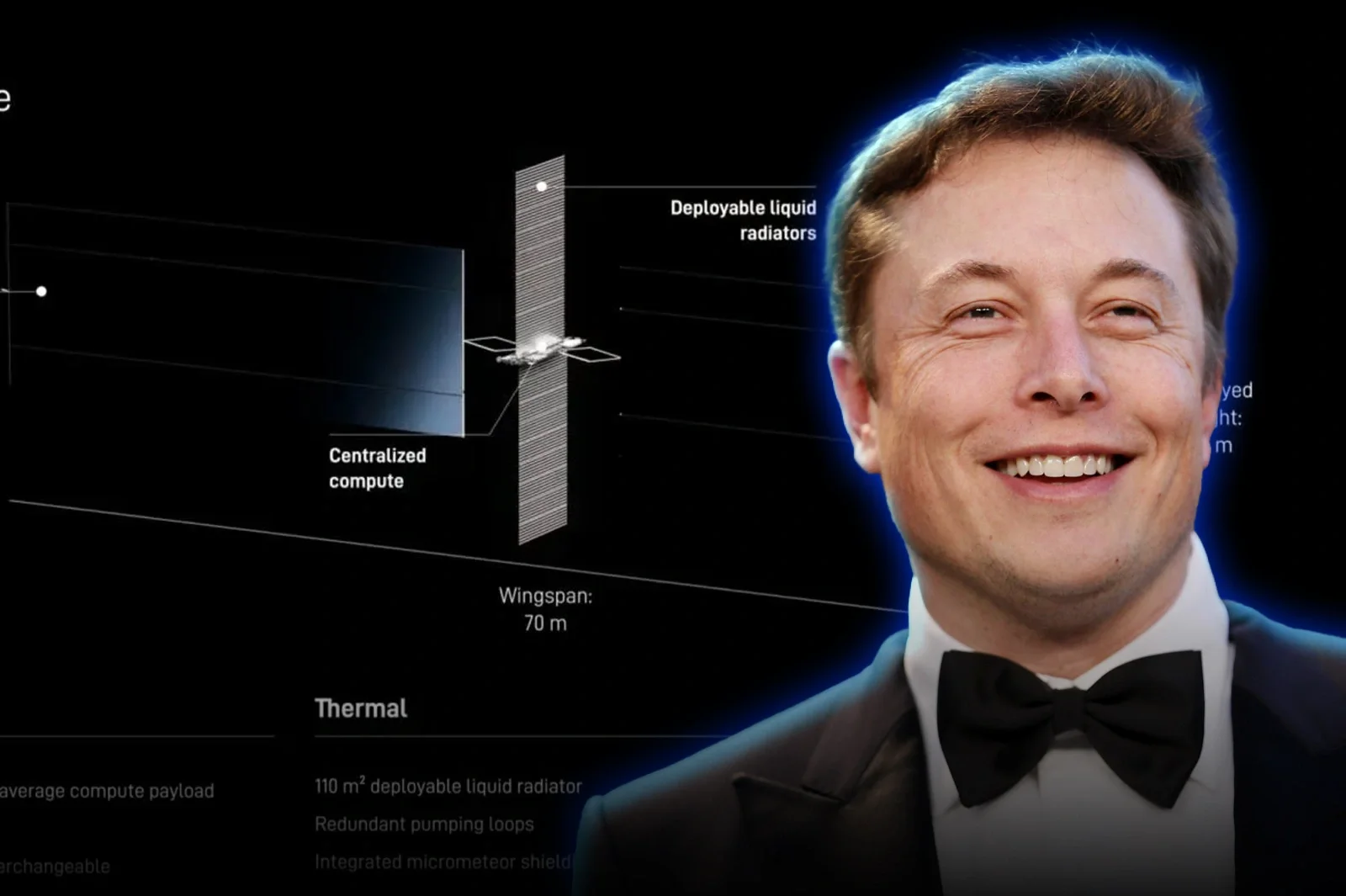
Elon Musk's company revealed the design of AI1, a satellite intended to perform AI computing in orbit

NuevoAgregar La Derecha Diario en
Compartir:

SpaceX unveiled the design of AI1, its first satellite intended to function as an orbital data center, amid the final stretch towards an IPO that could become the largest in history. The company founded by Elon Musk aims to raise USD 75 billion with a valuation close to USD 1.75 trillion, supported by a narrative that is no longer limited to rockets, Starlink, or space exploration, but directly targets the most competitive business in the tech world: infrastructure for artificial intelligence.

As terrestrial data centers face increasingly visible limits due to energy consumption, water usage, land availability, and saturation of electrical grids, SpaceX proposes to move part of that computing capacity to orbit. In space, solar energy can be harnessed consistently and thermal dissipation is achieved through radiators designed to operate in a vacuum, two critical points for sustaining intensive processing loads.
Al1 Satellite
Al1 Satellite

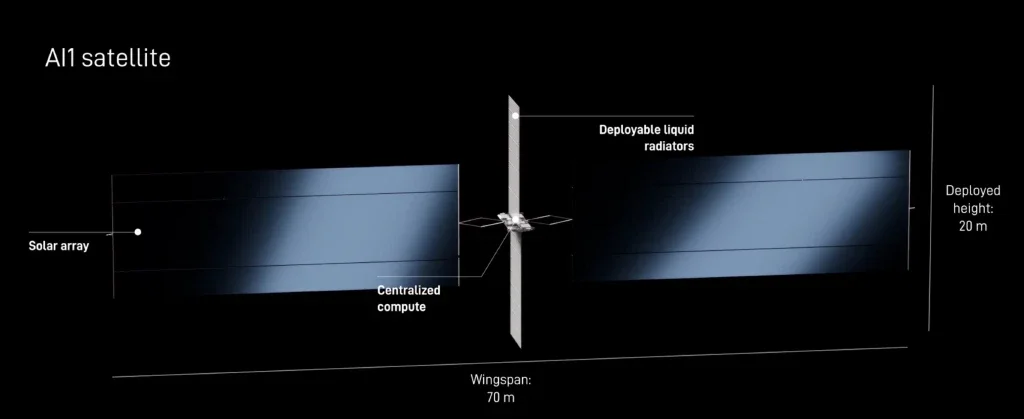
According to information released by the company, AI1 would measure 70 meters from tip to tip and 20 meters in height when deployed. The satellite is designed to support an average computing output of 120 kilowatts and reach peaks of up to 150 kilowatts, a scale comparable to the consumption of high-performance racks used in terrestrial data centers for artificial intelligence.

One of the key points of the project will be heat management . SpaceX proposed a liquid radiator architecture with redundant pumping loops and protection against micrometeoroid impacts, a sign that the company is trying to present the system as something more than a promotional model for investors. Operating in orbit requires solving temperature, maintenance, connectivity, and lifespan issues with a much lower margin of error than on land.


Musk stated that AI1 leverages developments from the Starlink V3 program and assured that, in terms of design, it would be simpler than a traditional satellite for satellite internet. According to his explanation, the platform is reduced to three main components: solar cells, radiators, and laser links, without the complexity of antennas that Starlink requires to provide connectivity to millions of users.

The first generation of these satellites would use components from Nvidia, the supplier that currently dominates the global market for artificial intelligence chips. It is not just about launching hardware into space, but about selling computing capacity in a market where the demand for processing is growing.

Elon Musk
Elon Musk

The company is also preparing an industrial facility called Gigasat in Bastrop, Texas, where it already produces Starlink terminals. The goal would be to support the manufacturing of this new line based on an existing production base, a decisive advantage if the plan scales from initial testing to a massive constellation.

SpaceX aims to conduct demonstrations of orbital computing by the end of 2027, before a possible broader deployment starting in 2028. Additionally, the company has requested permits to deploy up to one million data center satellites, a figure that highlights the magnitude of the plan.


La Derecha Diario logo
TwitterInstagramYouTubeTikTokFacebook
Derecha Diario TV

Nosotros

  • Quienes Somos
  • Autores
  • Donar

Privacidad

  • Protección de datos
  • Canales
  • Sitemap
  • RSS

Contacto

  • info@derechadiario.com.ar
PUBLICIDAD

Noticias relacionadas

Trump signed the law that guarantees funding for ICE and the Border Patrol until the end of his term

Trump signed the law that guarantees funding for ICE and the Border Patrol until the end of his term

The Trump administration launched new attacks against the Iranian regime following the end of the truce

The Trump administration launched new attacks against the Iranian regime following the end of the truce

Congressional Republicans demand an investigation into Democrat Ilhan Omar for financial irregularities and fraud

Congressional Republicans demand an investigation into Democrat Ilhan Omar for financial irregularities and fraud

The Inter-American Court of Human Rights ordered the closure of El Helicoide, the center of terror of the Chavista regime

The Inter-American Court of Human Rights ordered the closure of El Helicoide, the center of terror of the Chavista regime

Grupo México reaffirmed its intention to invest more than US$3 billion in freight trains

Grupo México reaffirmed its intention to invest more than US$3 billion in freight trains

The Milei government has determined a historic increase of 24.33% for universities

The Milei government has determined a historic increase of 24.33% for universities