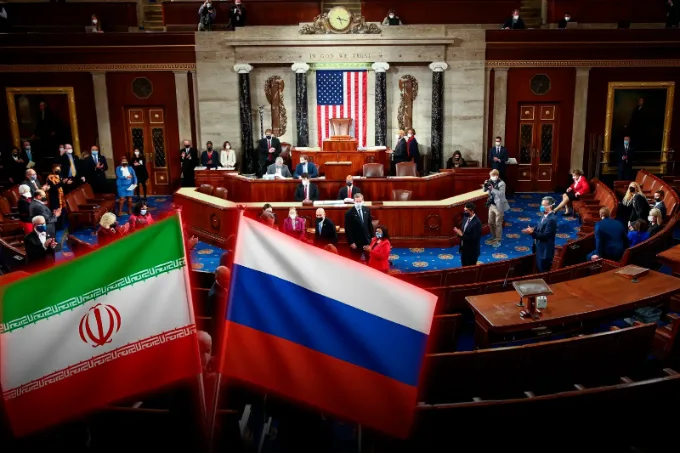

The United States Senate approved on August 7, by a wide majority of 86 votes to 11, a bill that tightens economic sanctions against Russia and Iran, in a new demonstration of bipartisan support for a policy of greater pressure on Washington's adversaries. The initiative, called the ''Lindsey Graham Sanctioning Russia Act of 2026'', still needs to be approved by the House of Representatives before reaching the desk of President Donald Trump.
The bill was originally pushed by the late Republican senator Lindsey Graham, from South Carolina, who died on July 11 after dedicating more than a year to promoting new measures against Moscow for its invasion of Ukraine. Following his death, Congress modified and renamed the legislation in his honor.
Democratic Senator Richard Blumenthal, one of the sponsors, emphasized before the vote that the measure represents the continuation of Graham's work to increase economic pressure on Vladimir Putin's government. According to Blumenthal, the bill aims to hit the Russian war machine and the so-called ''shadow fleet,'' used to maintain the trade of Russian products despite international restrictions.
If it ultimately becomes law, the initiative will establish new visa restrictions and allow for the freezing of financial assets belonging to Russian government officials and military forces, banks, and individuals linked to the Russian arms and energy industries.
One of the main objectives will also be to combat the mechanisms used to evade sanctions. The bill grants the president the ability to designate vessel operators involved in transporting Russian products to be subjected to new financial sanctions. In this way, Washington seeks to close avenues used by Moscow to maintain its energy and trade revenues.
The legislation also includes a particularly strong tool: the possibility of imposing tariffs of up to 500% on U.S. imports from Russia. It would also allow for tariffs of up to 100% on products from the five main countries that import Russian oil and gas.
Although Graham's original proposal was focused exclusively on Russia, provisions targeting Iran were added at Trump's request. The change comes as the confrontation between Washington and Tehran continues and reflects the Republican administration's intention to use economic pressure as part of a broader strategy to contain governments considered threats to U.S. interests.