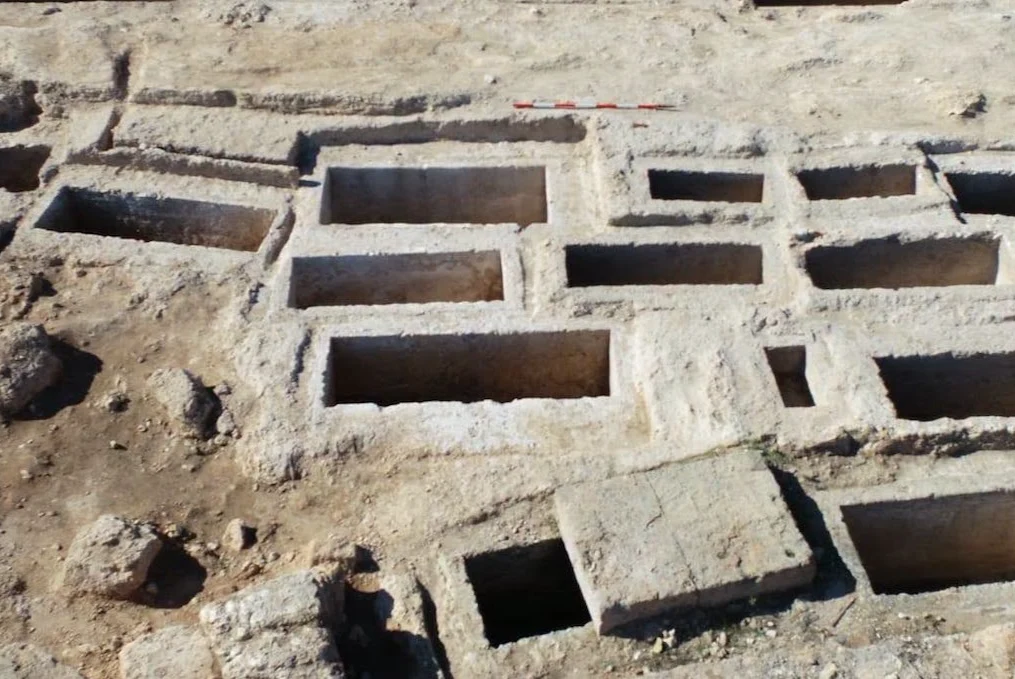







In southern Italy, within the Archaeological Park of the Messapic Walls of Manduria, archaeologists presented a rock-cut tomb that may have belonged to a priestess of Demeter. The burial, identified as Tomb 17, dates from the 4th to 3rd centuries BC and is approximately 2,300 years old.
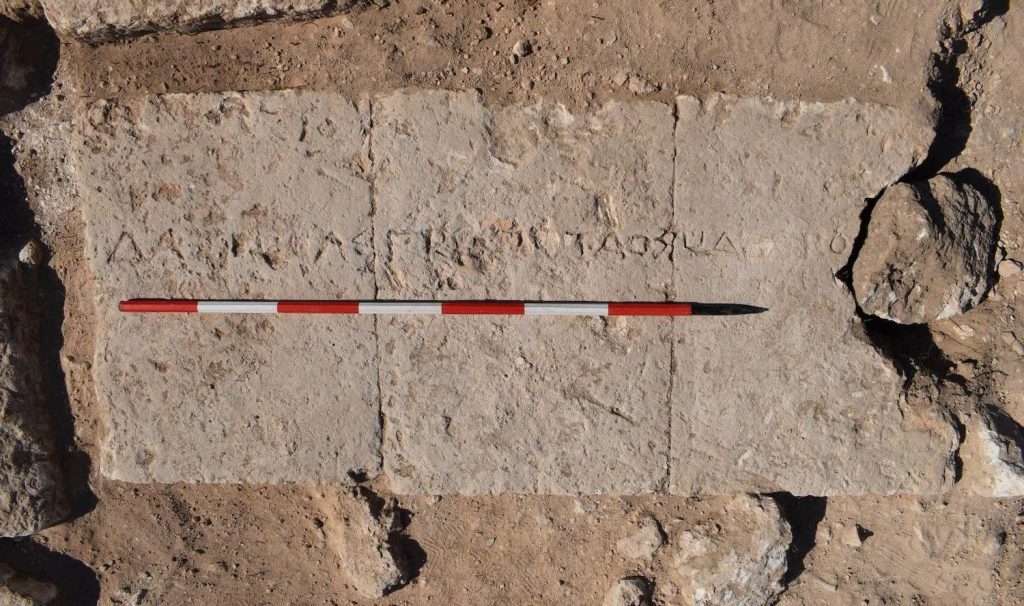
The structure was cut directly into the bedrock and was originally sealed with three large stone slabs. On the outer face of these slabs appears a monumental inscription written in Messapic, the language spoken in the southeast of the Italian peninsula before the Roman conquest.
The first epigraphic readings identified a woman's name, her father's name, and the term thabara, which specialists interpret as a title associated with a priestly function. The use of the genitive in the inscription suggests that this is the tomb of that woman, daughter of a named man, who would have held that role.
Inside the burial chamber, paintings are preserved that researchers describe as exceptional. They include geometric motifs, a repeated decorative border, a possible sanctuary key, and a ritual incense burner known as thymiaterion.
Inscriptions and Religious Symbols
A second inscription, painted in red and blue on the inner face of one of the slabs, again includes the word thabara. A nominal form provisionally reconstructed as Damatrioas also appears, which researchers are examining for its possible link to Demeter, the Greek goddess of agriculture, fertility, and the cycles of life and death.
The combination of these elements—the priestly title, the key, the incense burner, and the possible reference to the goddess—led the team to propose that the buried woman may have performed religious functions related to the cult of Demeter. This is a preliminary hypothesis that will need to be confirmed with more in-depth epigraphic and iconographic studies.