
The Trump administration reinforces its alliance with the Hungarian Prime Minister in the face of a decisive election that could redefine the country's political course.
Nuevo
Agregar La Derecha Diario en
Compartir:
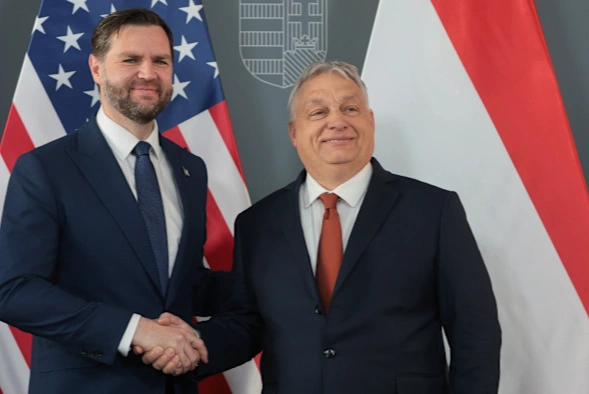
In a political gesture of high international impact, the US Vice President, JD Vance, traveled to Hungary to publicly support Prime Minister Viktor Orbán at a decisive moment in his political career.
The visit comes a few days before elections that are shaping up to be the most important elections of the 21st century in Hungary and that could mark a profound change in the direction of the European country.
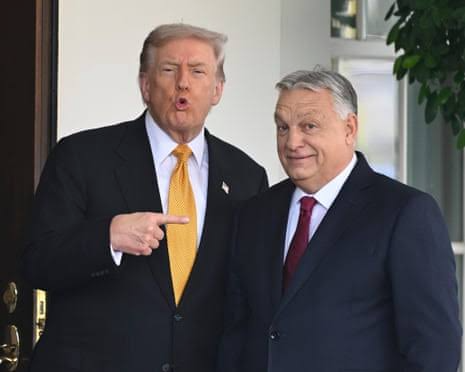
Washington's explicit support is no accident. The relationship between Orbán and President Donald Trump has been consolidated over the years on a shared vision of national sovereignty, border control and the defense of traditional values in the face of pressure from the Brussels bureaucracy. In this context, Vance's presence in Budapest seeks to send a clear signal: the United States is committed to the continuity of strong leadership in Central Europe

. Prime Minister Orbán with President Trump
The electoral context adds even more weight to the visit. Orbán faces an unprecedented challenge from the opposition led by the socialist Péter Magyar, in a scenario where the polls show a tight contest. In this sense, U.S. support can be decisive in consolidating the vote of those who prioritize political stability and a nationalist agenda over projects more aligned with
the European Union.
In addition, the bilateral relationship has had concrete consequences. During the current administration, Hungary obtained strategic benefits, such as exceptions to sanctions linked to Russian oil, in a context of strong energy pressure in Europe. These types of agreements reinforce the idea that the alliance with Washington is not only ideological, but also
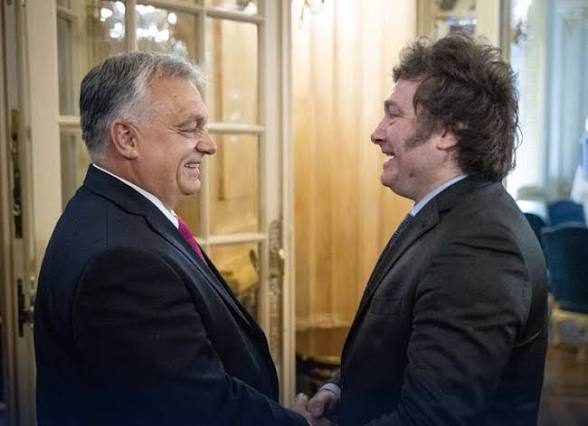
pragmatic. Javier Milei with Viktor Orbán
The April 12 election will not only define the future of Hungary, but will also have implications for political balance in Europe. A victory for Orbán would consolidate a block of countries that question the direction of the European Union and are committed
to greater national autonomy.
In this scenario, Vance's visit is not a simple diplomatic gesture, but rather a strategic move on an increasingly polarized political board, where Hungary has become a key player.