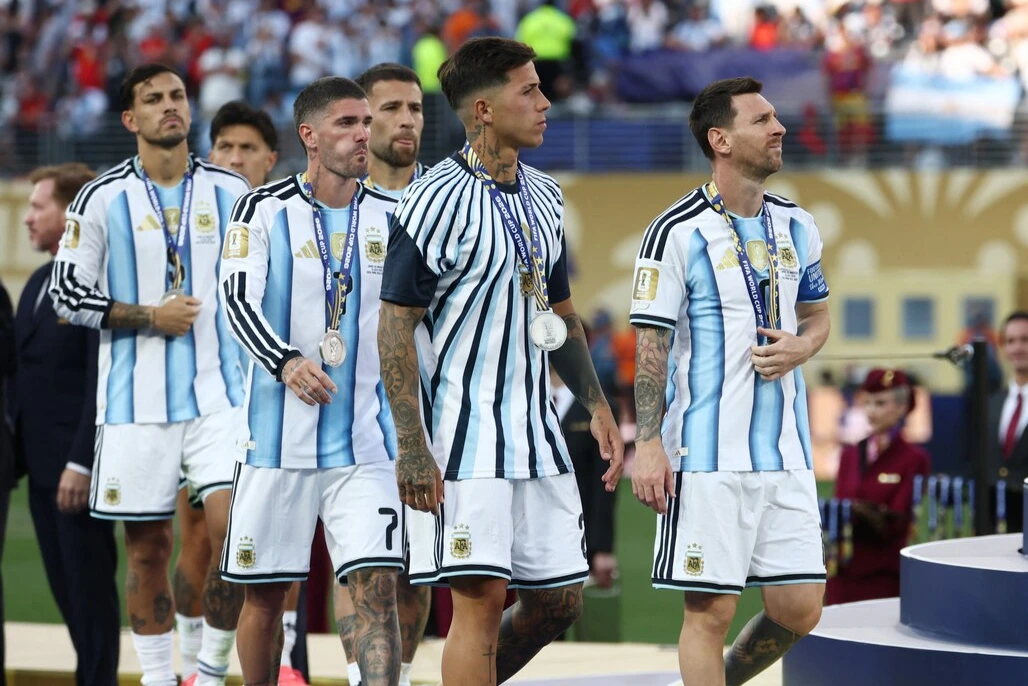






The defeat in a World Cup final always leaves wounds that are hard to heal, especially when the hope of repeating a championship is so close. Almost four months after the fall of the Argentine National Team against Spain in the 2026 World Cup, the repercussions of that match still generate debate. However, while various conspiracy theories about the outcome circulated on social media, Alexis Mac Allister decided to put a stop to the speculation and explain how the team experienced that day.
In an interview for Los Edul, the Liverpool midfielder was emphatic in dismissing the versions that pointed to supposed external factors that may have influenced the outcome of the match played on July 19 in New Jersey. "Being a football family, we understand that those things do not exist. Unfortunately, we live in a world today where social media allows for anything to be said, where there is a lot of impunity and anyone can say anything. Nowadays, there are so many things that are not real", expressed the player from La Pampa.
Moreover, he stated that the rumors did not change his perspective on what happened and defended the commitment of his teammates throughout the tournament. "People have that ability to say anything, and we, in the end, know well everything that happened. We gave it our all, and it's a shame we didn't win", he maintained.
Far from seeking excuses, the former Boca player also made a self-criticism about the performance of the Albiceleste and acknowledged the merits of the team led by Luis de la Fuente, which won 1-0 in extra time. "Football-wise, we weren't good, and they made the difference. Today, there is no doubt that they are the best in the world", he affirmed. In this regard, the midfielder distinguished between the physical aspect and the football aspect when analyzing the reasons for the defeat: "The physical parameters were good, but in terms of football, they weren't, and that's where they made the difference".
Another factor he mentioned was the accumulated fatigue during the competition, both due to the demanding schedule and the emotional burden of the decisive matches. "I felt good, with the general fatigue of playing every three days and mental exhaustion: the match against England was very tense, the buildup was heavy due to the history and how it is experienced in our country, and perhaps it took a bit of our energy", he explained.