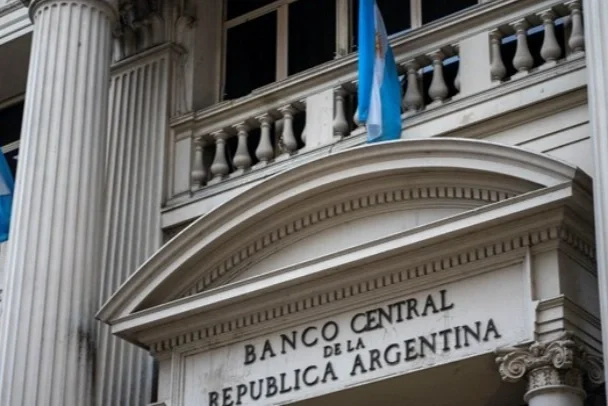
The Central Bank of the Argentine Republic (BCRA), under the management of President Javier Milei, announced a key measure this Thursday to unlock the potential of Argentinians' dollar savings and channel them into the real economy. Starting tomorrow, banking entities will be able to grant loans in foreign currency to companies that have dollar-backed guarantees from exporters.
This decision represents a concrete step towards the normalization and economic freedom promoted by the Government. It aims to give greater dynamism to the approximately 40 billion dollars that currently remain idle in bank deposits, directing them towards productive financing and the generation of jobs and exports.
According to Communication “A” 8446, the companies receiving the loans must have guarantees from exporting companies that generate regular income in foreign currency, in a reasonable proportion to the amount financed. A direct commercial relationship is not required, which expands the possibilities for operation. In this way, the prudential framework of decree 905/2002 is maintained, but the first specific relaxation for customer deposits is introduced, aligned with the goal of rebuilding trust in the financial system.
Banks, particularly local capital banks, have been calling for this opening for some time. Currently, they convert only 55% of dollar deposits into loans (compared to 85% in pesos), limited by restrictions that Milei's Government is beginning to lift responsibly.
 During an event with journalists, Javier Bolzico, from the Argentine Banks Association (Adeba), celebrated the potential of this measure: “Dollar deposits have great potential to grow”. He recalled that Argentinians hold about 330 billion dollars in liquid funds outside the system, of which around 250 billion would be in the country. This gap is the legacy of years of distrust; Milei's Government is working to reverse it.
Previously, the BCRA had already allowed entities to use their own currencies to offer loans of all types, which generated the first offers of personal and mortgage loans in dollars. Now a more ambitious step is being taken.
Expected impact: more credit, more production, and more genuine dollars
This regulation substantially improves financial intermediation in foreign currency. By allowing exporters to act as guarantors, credit risk for banks is reduced, and funds are channeled towards sectors that do generate genuine dollars for the economy.
It is a pro-market and pro-production measure that leverages existing resources without relaxing prudential rules. The Government seeks for savers to see the financial system as an ally and not as a risk, encouraging the return of more dollars to the formal circuit.
With decisions like this, Javier Milei's administration continues to advance in orderly deregulation, rebuilding trust, and creating conditions for sustainable growth. It is another step towards a freer economy, where savings are transformed into investment and Argentinians can finance productive development with their own resources.