The state vehicle promises to be economical and sustainable, but its technical and regulatory limitations are already raising doubts about its real viability in the market
The comparison with the international automotive industry does not help either. While companies like Tesla, BYD, Volkswagen, or Nissan develop models with greater autonomy, speed, equipment, and advanced safety systems, Olinia appears as a basic proposal, with limited performance and aimed solely at very short trips within neighborhoods or small urban areas.
Questions also extend to the use of public resources. The Mexican state is investing time and money in a product that is unlikely to compete with private innovation and could end up relying on permanent subsidies to remain operational.
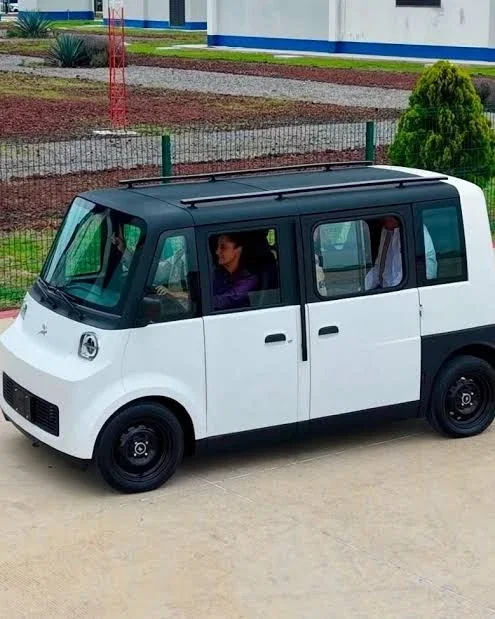
The Mexican president inside the Olinia car
This is compounded by uncertainty about fundamental aspects such as road safety, structural resistance, maintenance, and consumer acceptance. Many observers believe that the project was presented more as a political propaganda tool than as a real solution to the country's mobility challenges.
With limited speed, few features, and a regulation designed specifically to make it viable, Olinia faces the challenge of proving that it can be more than a costly state experiment. The project risks becoming a symbol of government intervention and bureaucracy rather than a true Mexican technological innovation.
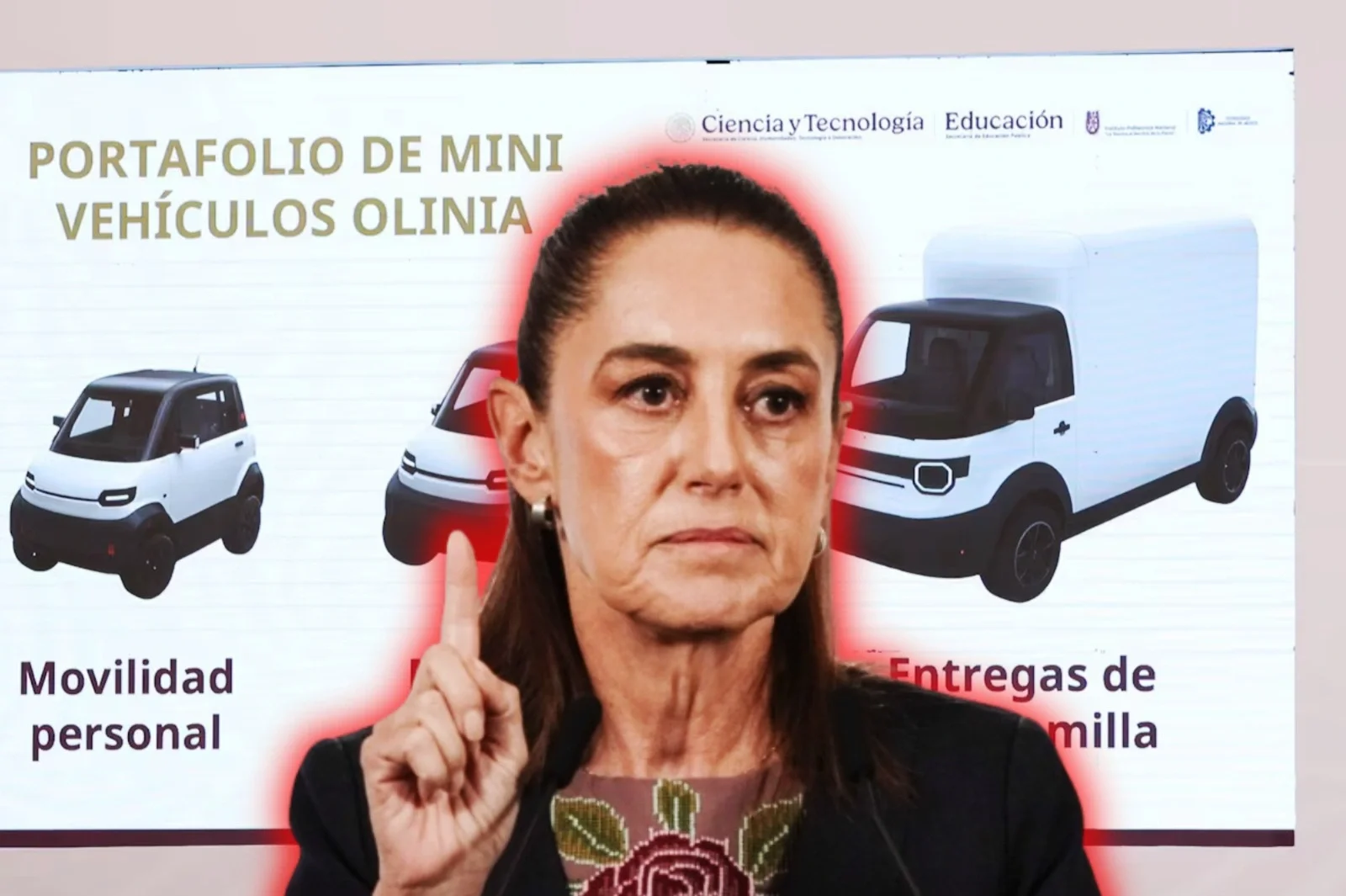
The Mexican president Claudia Sheinbaum officially presented Olinia, an electric vehicle developed by public institutions that the government promotes as an economical alternative for urban mobility. However, far from generating enthusiasm, the project has sparked numerous criticisms due to its technical limitations and the need to modify regulations to allow its circulation.
According to data released by authorities, the vehicle would have a price ranging from 90,000 to 150,000 Mexican pesos, would reach a maximum speed of only 50 kilometers per hour, and could be charged using a conventional household outlet. Although the government highlights these features as advantages, this data makes it an extremely limited product compared to the options currently available in the market.
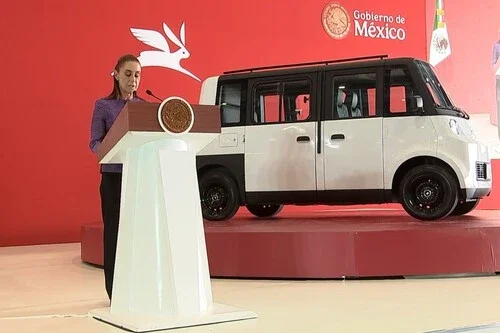
Mexican President Claudia Sheinbaum alongside the Olinia vehicle
The situation becomes even more controversial due to a key detail: Olinia does not fit within the current regulations for automobiles in Mexico. Instead of adapting the vehicle to existing standards, the government is working on creating specific regulations so that the project can operate legally.
This point summarizes the main problems of the initiative. A vehicle that needs tailor-made regulation even before it starts to be sold raises questions about its design, safety, and ability to compete on equal terms with other manufacturers.