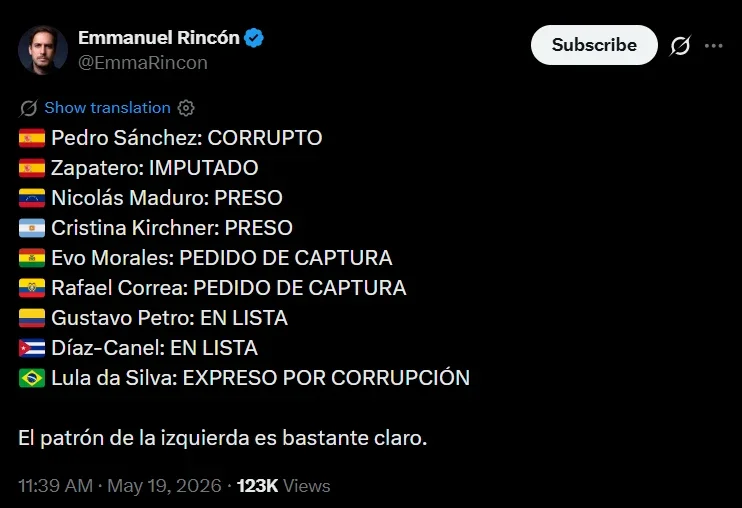
For years, the Latin American left presented itself as a “moral” alternative to liberal and center-right governments. However, over time, many of its main leaders ended up embroiled in corruption cases, judicial convictions, arrest warrants, or institutional scandals.
From Spain to Latin America, the pattern seems to repeat itself over and over: progressive leaders accused of using the state apparatus to enrich themselves, persecute opponents, or sustain political structures financed with public money.
The list is increasingly extensive and generates significant wear on the historical narrative of the international left.
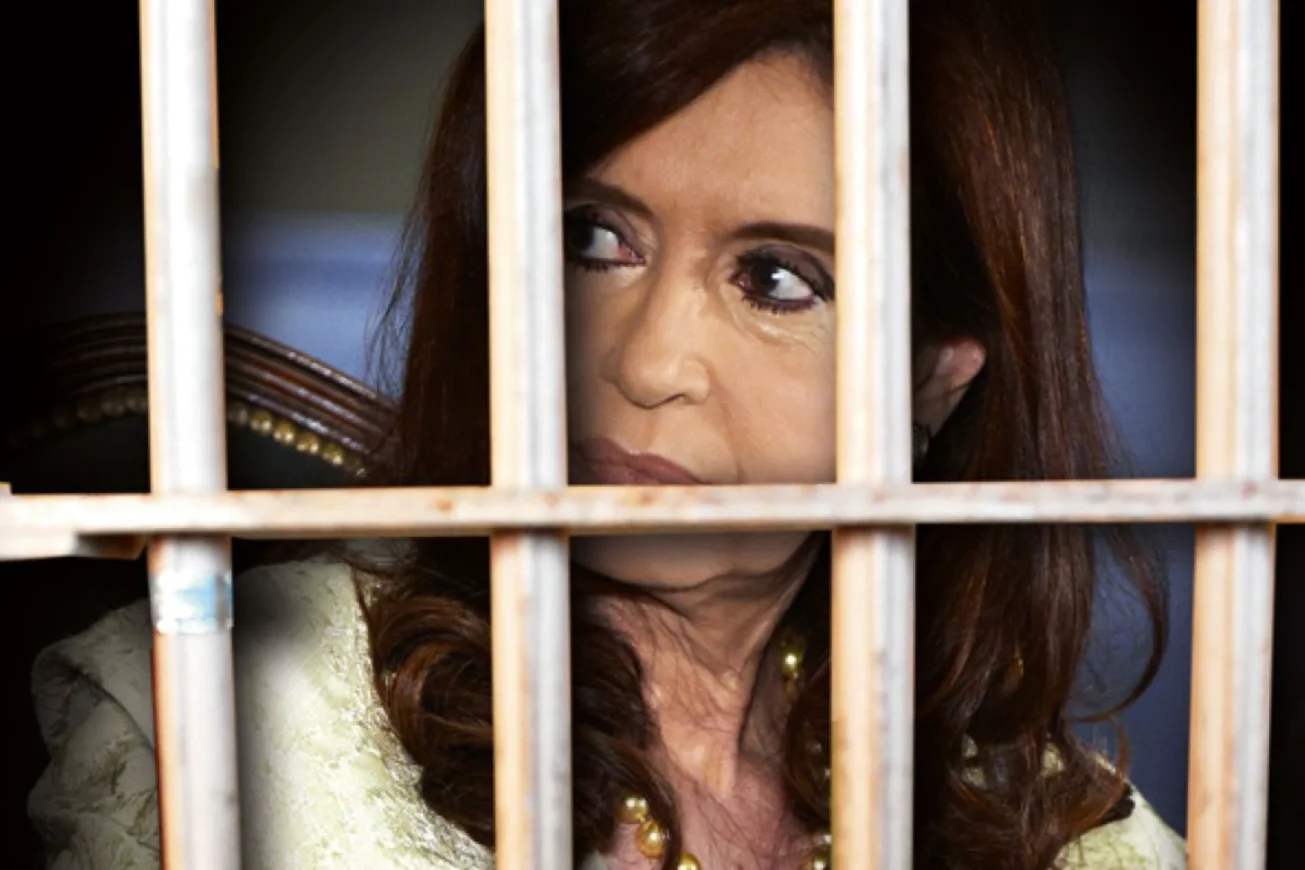
Cristina Kirchner convicted of corruption
In Argentina, Cristina Fernández de Kirchner was convicted in the Vialidad case for fraudulent administration against the State. The investigation revealed a scheme for directing public works during the Kirchnerist governments, favoring businessmen close to power.
The former president has become one of the strongest symbols of political corruption in Latin America and also faces multiple judicial investigations related to money laundering, illicit association, and irregular management of public funds.
Rafael Correa and Evo Morales with arrest warrants
In Ecuador, former president Rafael Correa has accumulated convictions and arrest warrants related to corruption and bribery. The former leader remains outside his country while the Justice system upholds the accusations against him.
In Bolivia, former president Evo Morales also faces growing judicial and political scrutiny after years of power concentration, institutional crisis, and allegations of state abuse.
Nicolás Maduro and Venezuelan authoritarianism
Nicolás Maduro's regime is internationally criticized for systematic human rights violations, political persecution, and economic destruction. Venezuela has gone from being one of the richest countries in the region to experiencing one of the largest migratory exoduses on the continent.
Meanwhile, various international organizations continue to investigate Chavismo for possible crimes against humanity.
Lula da Silva and the Lava Jato scandal
In Brazil, Luiz Inácio Lula da Silva was imprisoned for corruption in the context of the mega case Lava Jato, which uncovered a vast network of bribery among businessmen and political leaders of the Workers' Party.
Although he later regained his political rights, the case exposed the workings of one of the largest corruption schemes in Brazilian history.
The pattern that repeats
Pedro Sánchez and the suspicions in Spain
In Spain, Pedro Sánchez's government is facing increasing political scandals and allegations that hit the socialist establishment. Pressure on the president's circle has increased in recent months following various investigations and corruption accusations affecting figures close to the PSOE.
At the same time, historical figures of Spanish socialism like José Luis Rodríguez Zapatero have also been embroiled in strong controversies due to their ties with Latin American dictatorships and authoritarian governments.
The rise of the right and the exhaustion of progressivism
The wear of leftist governments has paved the way for the growth of new liberal, conservative, and sovereignist forces in various parts of the world. The rise of Javier Milei to power in Argentina reflected that cultural and political change that is also beginning to be seen in Europe and the United States.
More and more citizens are questioning the statist model promoted by progressivism for decades and associating the left with corruption, clientelism, and institutional deterioration.