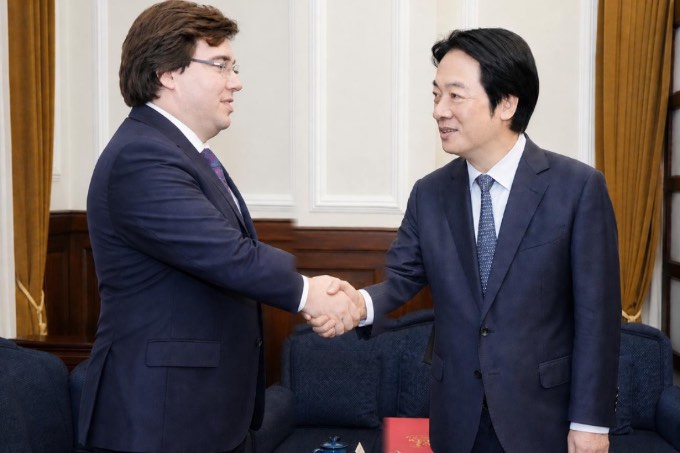
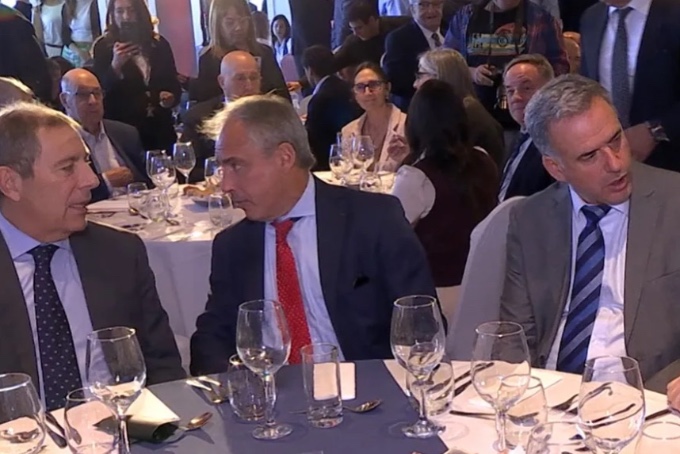
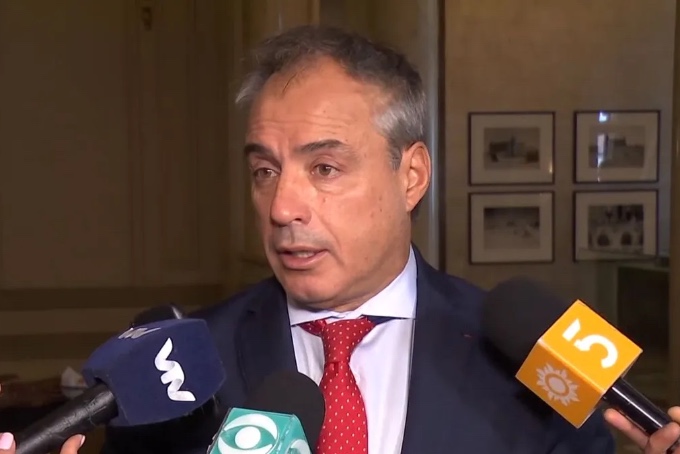
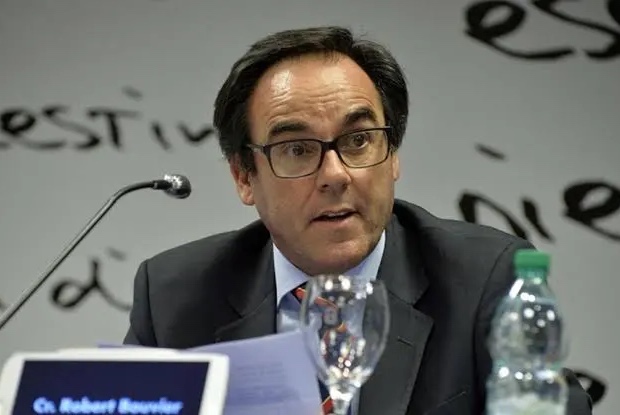
The former deputy of the National Party and president of the FREE Foundation, Pablo Viana, met this week in Taipei with the president of Taiwan, Lai Ching-te, and spoke at the Ketagalan Forum on democratic resilience and hybrid warfare
His presence at one of the main security forums in the Indo-Pacific is an almost solitary exception. While he raises the need to cooperate with democracies in the face of authoritarian coercion, most of the Uruguayan political class maintains a servile and long-term alignment with the Beijing regime that is, by any standard of sovereignty and national interest, regrettable
Since 1988, when Uruguay broke relations with the Republic of China (Taiwan) to recognize the People's Republic, the country's diplomatic tradition has consisted of subordinating any consideration of values, strategic autonomy, or diversification to the demands of a single-party state. That tradition is neither neutral nor inevitable: it is a political choice that has consolidated to become almost dogma. The visit of President Yamandú Orsi to Xi Jinping in early 2026 and the joint declaration reaffirming that Taiwan "is an inalienable part of Chinese territory" and supporting efforts for "national reunification" were not a slip. They were the continuation of a stance that had already been subscribed to by previous governments of different signs. The result is a political class that, for the most part, treats the relationship with Beijing as a fait accompli and untouchable, while minimizing or ignoring the costs
Economic dependence and political subordination
China is Uruguay's main trading partner. In 2025, it accounted for nearly 26% of total goods trade. Exports—soybeans, cellulose, and beef, almost exclusively—exceeded 3.4 billion dollars. Imports from China (machinery, electronics, plastics, and increasingly, vehicles) also grew strongly, to the point that in several indicators, China has already displaced Brazil as the main partner
This dependence is not only commercial: it translates into political self-censorship. Any gesture that might annoy Beijing—even the most modest exchange with Taiwan—is dismissed or discouraged. Trade between Uruguay and Taiwan hovers around just 44-50 million dollars annually. There are no significant offices or preferential agreements. The political class prefers not to explore that space because it prioritizes not irritating the dominant buyer. The result is an asymmetric relationship in which Uruguay sells commodities and buys manufactures, accepts the "one China" discourse without real counterbalances of technological or institutional diversification, and cedes ground in terms of autonomy
The Paraguayan contrast: what is lost by not pivoting
Paraguay, the only South American country that maintains diplomatic relations with Taiwan, demonstrates that there is another way. Its exports to the island rose from about 40 million dollars in 2017 to around 343 million in 2025, with projections close to 350-400 million. Beef and pork enjoy zero or very low tariffs; in 2026, the market was opened to chicken. Additionally, cooperation includes an artificial intelligence center, a technology park, hundreds of scholarships, and the digitization of SMEs. Taiwan does not limit itself to buying raw materials: it transfers capabilities
Uruguay, by political choice, deprives itself of that type of relationship. While Paraguay gains preferential access and technological cooperation with a democracy, Montevideo is content to be just another supplier of commodities for a regime that does not share institutional values and uses its economic weight to discipline its partners
Illegal fishing: predation based in Montevideo
The same power that the Uruguayan political class aligns with so diligently operates one of the most aggressive distant water fishing fleets on the planet. Hundreds of vessels—mostly Chinese—concentrate in the 201-mile zone of the South Atlantic, off the coasts of Argentina and Uruguay, capturing squid and other species. The port of Montevideo serves as a logistical base for supplies, crews, and transshipments. Reports document repeated complaints of illegal, unreported, and unregulated fishing, turning off identification systems, and pressure on stocks. Chinese capital controls a significant portion of the squid fleet under the Argentine flag. The result is overexploitation, damage to ecosystems, and loss of opportunities for local fishermen
Uruguay charges for port services while its political class avoids confronting the underlying problem. It is the same pattern: maximizing immediate income and postponing any questioning that might discomfort Beijing
A pivot is needed
Pablo Viana's meeting with Lai Ching-te and his intervention on hybrid warfare do not alone change foreign policy. They do show that the almost unanimous alignment of the Uruguayan political class with China is not the only possible path nor the most convenient for national interest. The tradition inaugurated in 1988 and reinforced time and again—including the declarations of 2026—has turned Uruguay into a docile partner that sells commodities, accepts Beijing's political discourse, and tolerates predatory practices on its own coasts
A pivot does not mean breaking overnight with the main buyer. It means stopping treating that relationship as sacred, opening real space for ties with democracies that offer higher value-added markets, technology, and cooperation without the current asymmetries, and regaining the ability to question when the costs—economic, environmental, and of sovereignty—outweigh the benefits. While most of the political class prefers the comfort of alignment, figures like Viana will continue to be exceptions. The cost of that comfort is borne by the country