
While the World Cup distracted people, Orsi and Oddone took the opportunity to go against dollar savings

While the World Cup distracted people, Orsi and Oddone took the opportunity to go against dollar savings
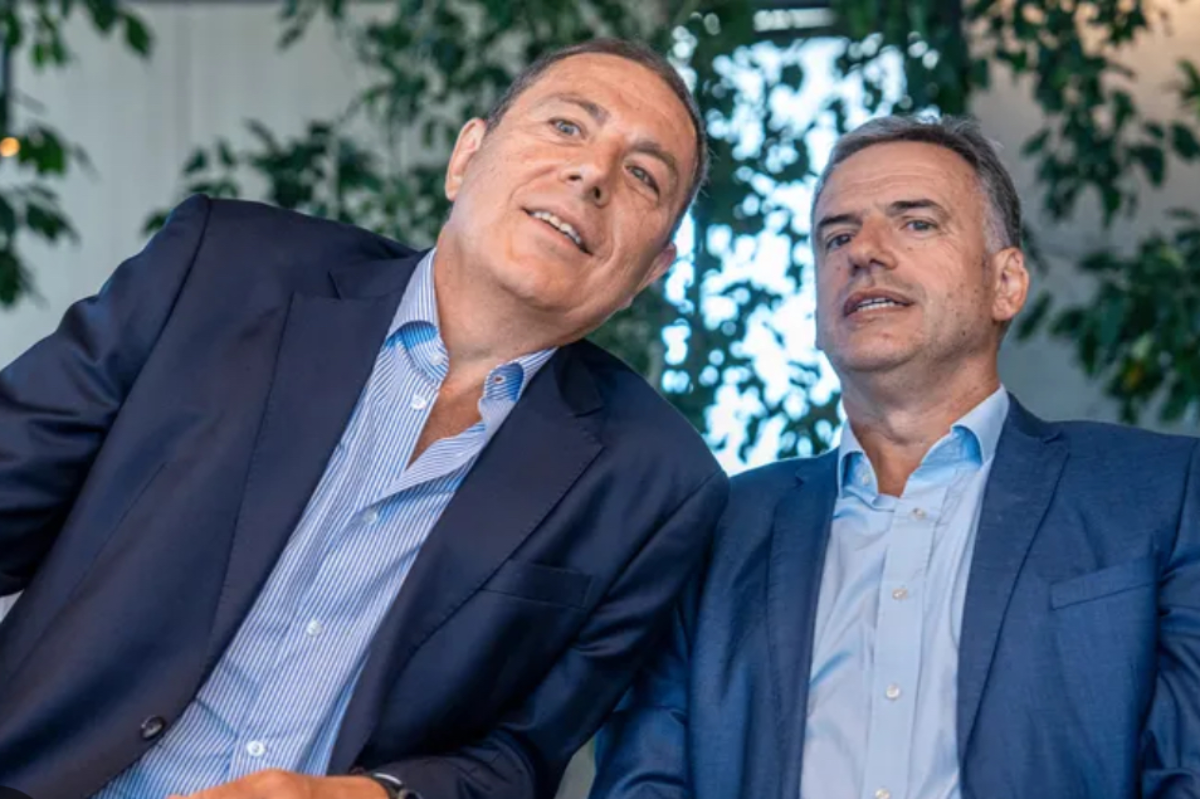
Oddone and Orsi

Most read in Uruguay

Uruguay on the Side of Criminals: The Government's Decision to Stay Out of the Shield of the Americas is Confirmed

  1. While the World Cup distracted people, Orsi and Oddone took the opportunity to go against dollar savings

  2. The State is going to spy on everything: The loading guide is a pretext to monitor home renovations

  3. Good news: While the political class kneels before China, Pablo Viana met with the president of Taiwan

  4. Shameful: Uruguayan justice condemned the Uruguayan people to compensate investors in livestock funds

Imagen de Editorial Team
porEditorial Team
Uruguay

While Uruguayans were calculating the chances of the Uruguayan national team, the Uruguayan government moved against savings in dollars

Add La Derecha Diario on
Share:

In the days when Uruguayans passionately followed each match of the 2026 World Cup, discussing plays and chances of qualification, the Central Bank of Uruguay moved forward with a measure that did not go unnoticed by those who closely observe the economy. Under the administration of Yamandú Orsi, the issuing entity put a regulatory project up for consultation that requires banks to provide customers who open or already hold dollar accounts with an explicit and signed warning about the "risks" of that decision.

The text that savers must sign is clear in its purpose: it reminds them that the value of their deposits in foreign currency, expressed in pesos, may decrease due to exchange rate fluctuations and that they could "recover less than what they deposited in terms of local purchasing power." There is no equivalent warning for those who choose pesos. The declared objective is to "contribute to the process of dedollarization" of an economy where, by the end of 2025, deposits from the non-financial sector (families and businesses) in private banks and the BROU totaled the equivalent of US$ 44.963 billion, of which 73% was denominated in dollars.

Uruguay is among the top three countries in the world with the highest percentage of dollarization of deposits. This figure represents approximately US$ 32.823 billion in dollar deposits solely in the local financial system. Additionally, Uruguayan residents hold around US$ 62 billion in deposits and financial investments abroad.

This is not a simple informational note. It is a deliberate step to disincentivize a practice that millions of Uruguayans have adopted as a rational defense of their assets. Over the past three decades, according to the Central Bank's own president, Guillermo Tolosa, Uruguayans have lost almost half of their purchasing power due to a lack of trust in the national currency. Holding dollars is not an ideological whim or a speculative bet: it is the logical response of people who have learned, through their own history, that the peso can erode the value of accumulated work.

What the government and the Central Bank present as "information for more informed decisions" has an immediate practical effect. At the same time that they require signing that warning (which will come into effect generally on August 1, 2026, and must be personally notified to all existing customers before December 31, 2026), the banking reserves are modified. For dollar deposits, the reserves remain unchanged: 28% for those under 180 days and 20% for longer-term deposits. In contrast, for peso deposits, a gradual reduction of the reserve ratios applicable to short-term obligations has been established, seeking to generate greater incentives to operate in the national currency.

The institutional message is consistent with a vision that considers dollarization a problem in itself. The president of the BCU has pointed out that when a Uruguayan deposits in dollars, 65% of those funds end up being exported or fleeing abroad because companies in the country do not want that currency. "A country that has enormous needs of all kinds to grow cannot afford to export two-thirds of its savings," he argued.

The real problem is not that people choose dollars. It is that the peso, over time, has not offered enough stability to compete on equal terms. When a government decides to attack citizens' choices instead of creating the conditions for the peso to be a reliable currency, it is acting on the symptom and leaving the cause intact.

Interventions that distort savings and credit incentives often generate effects that go beyond the immediate. They reduce trust in the formal financial system, push part of the savings towards less visible channels or directly abroad, and ultimately limit banks' capacity to grant productive loans. With US$ 32.823 billion in dollars deposited locally and another US$ 62 billion abroad, any measure that increases friction on those funds has a potentially significant impact on the liquidity available for the real economy.

Uruguayans who hold dollars in the local banking system are not financing foreign deficits out of ignorance. They are protecting the fruit of their efforts against a recurring history of policies that prioritize public spending over monetary stability. Forcing banks to provide a kind of "financial octagon" — a highlighted warning that must be signed — does not change that reality. It only adds friction, distrust, and an additional cost to those who have already decided, with their own money and experience, what the best way to preserve value is.

Measures of this type rarely remain isolated. Once it is accepted that the State can "guide" savings decisions through asymmetric regulations and institutional messages, the way is opened for subsequent steps: higher regulatory costs, differential taxes on the profitability of assets abroad (progress has already been made in this regard with changes to the IRPF since 2026), or more direct restrictions. Each intervention generates pressures for new interventions when the results are not as expected.

Meanwhile, people continue to work, save, and decide how to protect what they have built. The government, on the other hand, chooses the moment when public attention is focused elsewhere to move in a direction that, far from strengthening the national currency, erodes trust in the institutions that manage it. With US$ 44.963 billion in deposits from the non-financial sector and a dollarization of 73%, the numbers speak for themselves: Uruguayans have already voted with their money.

This move during the World Cup did not go unnoticed by those who understand that the economy is not built on paternalistic warnings or regulations that punish prudent decisions. It is built when the rules are stable, predictable, and respectful of people's ability to manage their own assets. Everything else ends up being, simply, an additional cost borne by society as a whole.


La Derecha Diario on X

  1. MILEI BASADÍSIMO: El presidente compartió una foto de un busto de Néstor Kirchner con la frase: "La hicieron sin brazos para que no siga afanándonos".

    10 min ago

  2. ABRAN LOS MANICOMIOS: Una demente feminista que salió en corpiño atacó a un colectivero porque le pidió que se tape, luego se filmó como una delirante durante todo el viaje y, antes de bajar, le mostró las tetas frente a todos los pasajeros para "ver cómo trabaja con el pito parado".

    20 min ago

  3. EXCELENTE: La Policía italiana reprime a palazos a los inmigrantes musulmanes y terroristas de extrema izquierda que salieron a generar disturbios en Turín.

    29 min ago

  4. SE TERMINÓ LA JODA: YA DESALOJARON 1.000 PROPIEDADES USURPADAS EN CABA El Gobierno de la Ciudad ya recuperó inmuebles por más de 500 millones de dólares y los devolvió a sus legítimos propietarios. Entre los lugares desalojados había edificios ocupados durante décadas, talleres textiles clandestinos y propiedades convertidas en búnkeres narco. El último operativo puso fin a 15 años de usurpación en Mataderos.

    38 min ago

  5. ÉXTASIS: Un conductor se bajó de su camioneta y cagó a piñas al despreciable “Bici Bandido” luego de que el miserable “influencer” se le cruzara con su bicicleta, como hace recurrentemente para intentar crear contenido.

    50 min ago

La Derecha Diario logo
TwitterInstagramYouTubeTikTokFacebook
Derecha Diario TV

Nosotros

  • Quienes Somos
  • Autores
  • Donar

Privacidad

  • Protección de datos
  • Canales
  • Sitemap
  • RSS

Contacto

  • info@derechadiario.com.ar
PUBLICIDAD
La Derecha Diario logo
ESX logoInstagram logoYouTube logoTikTok logoFacebook
ARGENTINAUNITED STATESECUADORISRAELMEXICOURUGUAY
DERECHA DIARIO TV
  • ES
    XInstagramYouTubeTikTokFacebook
  • DERECHA DIARIO TV
  • Sections
  • ARGENTINA
  • UNITED STATES
  • ECUADOR
  • ISRAEL
  • MEXICO
  • URUGUAY
  • Countries
  • La Derecha Diario logoLA DERECHA DIARIO
  • La Derecha Diario México logoLA DERECHA DIARIO MÉXICO
  • La Derecha Diario Uruguay logoLA DERECHA DIARIO URUGUAY
  • La Derecha Diario Ecuador logoLA DERECHA DIARIO ECUADOR
  • La Derecha Diario Israel logoLA DERECHA DIARIO ISRAEL
  • La Derecha Diario Estados Unidos logoLA DERECHA DIARIO ESTADOS UNIDOS
  • Topics
  • GUERRA EN IRÁN
  • The Newspaper
  • QUIENES SOMOS
  • AUTORES
  • PUBLICIDAD
  • DONAR

Related news

A working man against the system: Jorge Fernández Pereyro goes to the BPS for companies to stop the abuses

A working man against the system: Jorge Fernández Pereyro goes to the BPS for companies to stop the abuses

The caste of the Board: 31 "honorary" councilors that cost a fortune to Montevideo

The caste of the Board: 31 "honorary" councilors that cost a fortune to Montevideo

The port of Montevideo empties as the government "negotiates" with the unions

The port of Montevideo empties as the government "negotiates" with the unions

Alberto Fernández denied that there was a quarantine in Argentina and stated that it was an invention of the opposition

Alberto Fernández denied that there was a quarantine in Argentina and stated that it was an invention of the opposition

Óscar Puente refused to resign after the train tragedy in Spain that left at least 69 dead

Óscar Puente refused to resign after the train tragedy in Spain that left at least 69 dead

After the fraudulent runoff election, the regime of Lula da Silva approved a new VAT-type tax of 11.3%

After the fraudulent runoff election, the regime of Lula da Silva approved a new VAT-type tax of 11.3%