The family business received millions from business groups linked to public works and used real estate operations to give a legal appearance to those funds
The Financial Information Unit (UIF) stated that 88% of the billing of Los Sauces, the real estate company of the Kirchner family, came from operations intended to launder money from corruption linked to public works.
The accusation was presented during the oral trial for the Hotesur and Los Sauces cases, where the agency described the functioning of a structure that used properties and rental contracts to give a legal appearance to funds coming from corrupt businessmen benefited during the Kirchner governments.
According to the request for elevation to trial, Cristina Fernández de Kirchner held the position of head of a criminal organization that operated between May 2003 and December 2016. The UIF attributed to her having planned, coordinated, and directed, between January 2009 and March 2016, a money laundering mechanism through the family real estate business.
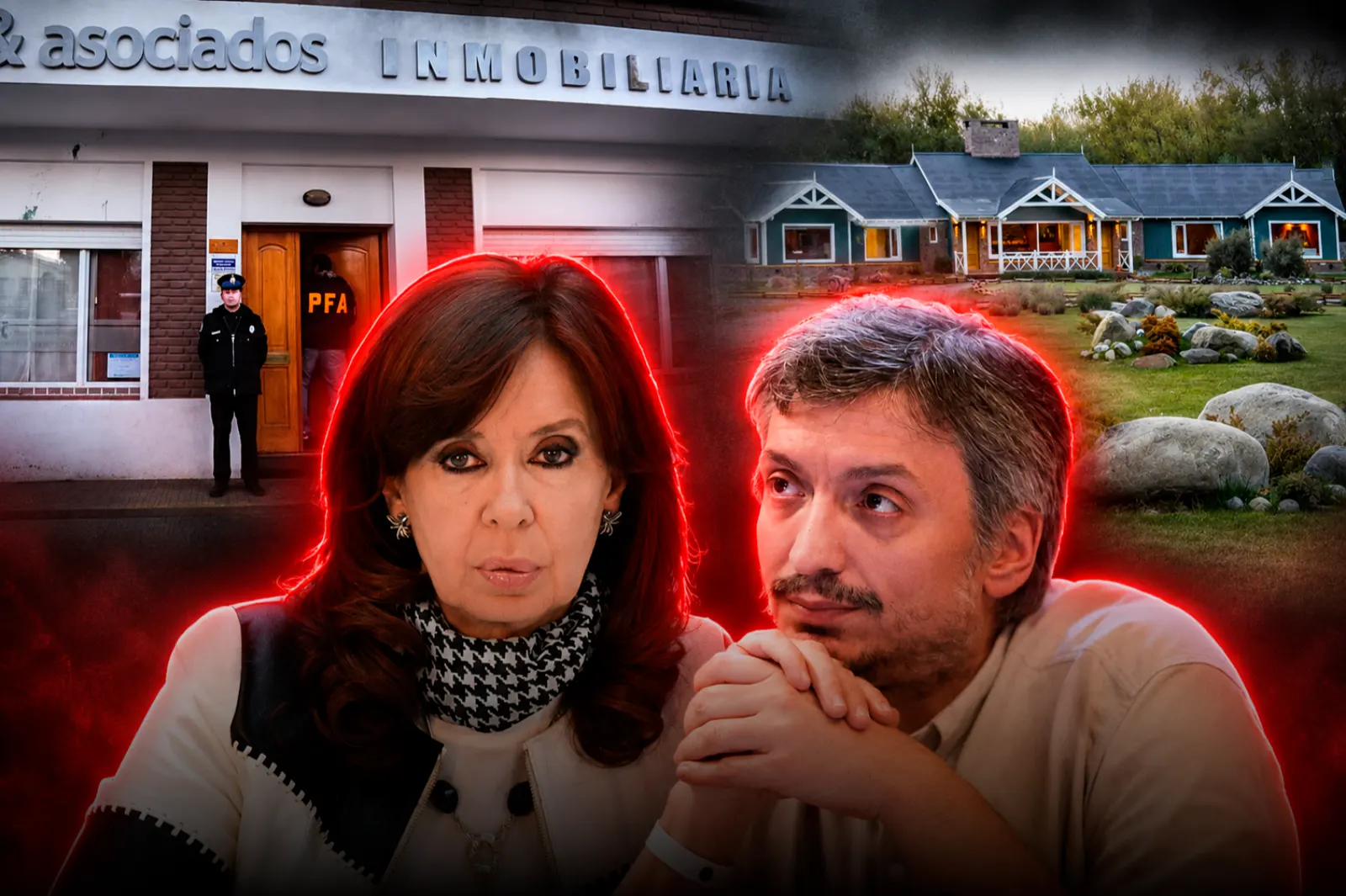
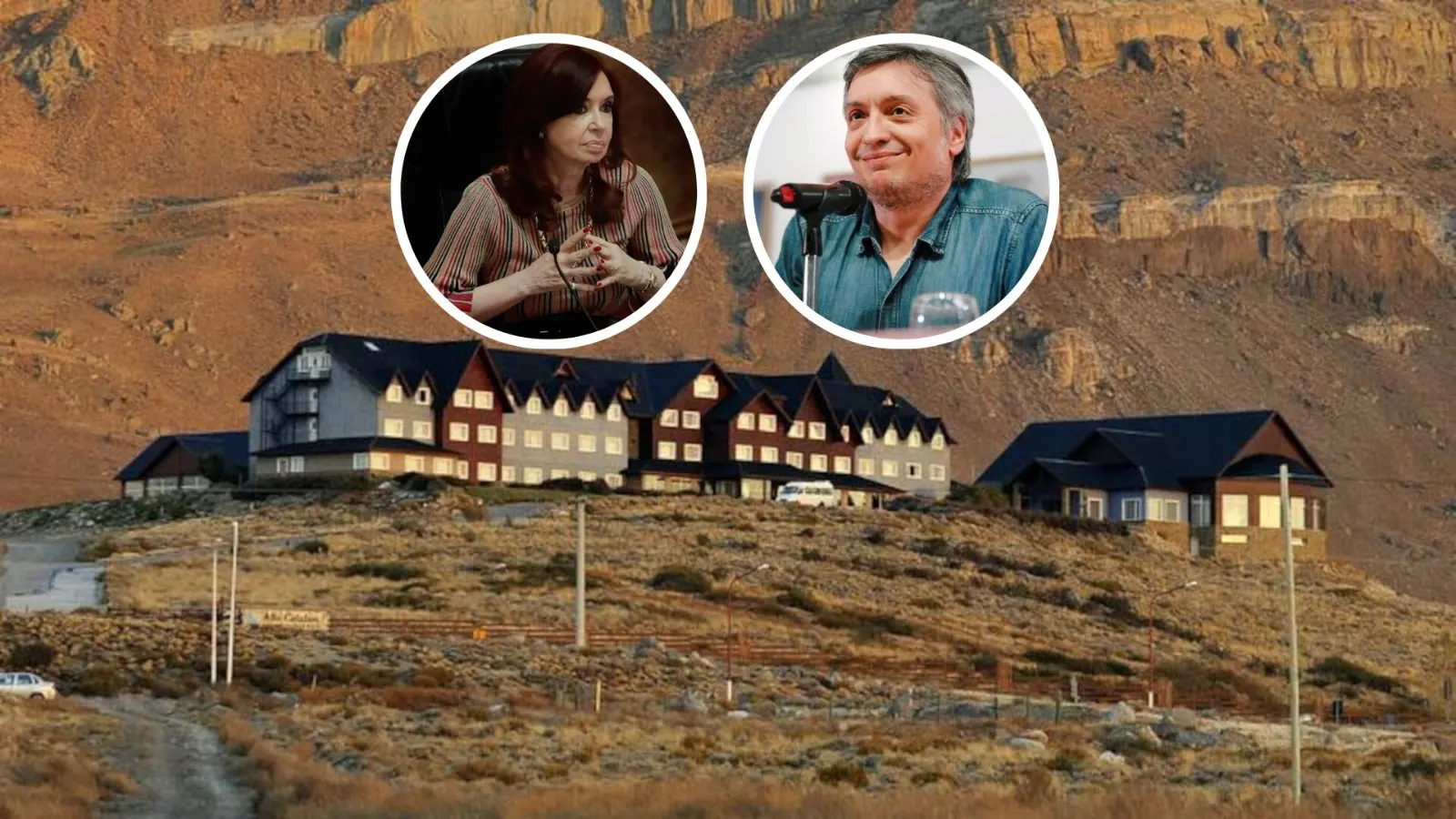
Cristina and Máximo Kirchner.
The investigation identified transfers from companies linked to Lázaro Báez and the Indalo group, including Austral Construcciones, Kank y Costilla, Loscalzo y Del Curto, Valle Mitre, Álcalis de la Patagonia, and Inversora M&S. Operations from Idea S.A. also appeared.
The records analyzed by the agency indicate that Los Sauces received $6,851,650 from Báez's companies, $18,554,725 from the Indalo group, and $561,665 from the management company Idea. Together, these operations represented 88% of the income billed by the company.
The real estate operations under investigation
Los Sauces was established on November 7, 2006, by Cristina Kirchner, her husband Néstor Kirchner, and her son Máximo, with real estate, hotel, and tourism activities as its corporate purpose. The UIF reconstructed a series of acquisitions and transfers of properties that were part of the circuit used to channel the funds.
Among the mentioned operations is the purchase of a 426 square meter apartment in Madero Center, Puerto Madero, which was later rented to Inversora M&S and Álcalis de la Patagonia. A duplex in the same complex, with five parking spaces, was also included, which was leased to Inversora M&S.
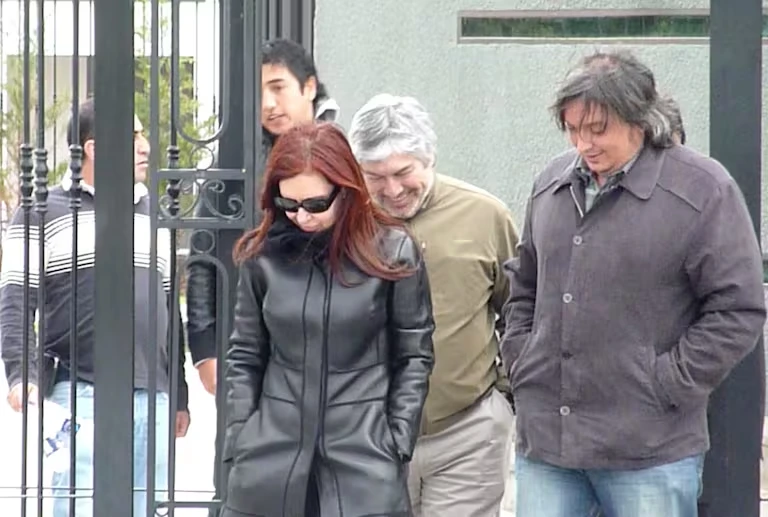
Cristina Kirchner, Máximo Kirchner and Lázaro Baez.
In Río Gallegos, the company received a plot of land on Alvear Street, where the construction company Loscalzo y Del Curto, linked to Báez, built four apartments that were later rented by Kank y Costilla.
The accusation also included the acquisition of a plot of land in El Calafate for $136,149, despite its official appraisal being $445,000, and the purchase of the La Aldea del Chaltén hotel for $200,000, when its market value would have been $2,890,000. This establishment was later rented to Valle Mitre and Idea.
The role of Cristina and Máximo Kirchner
In the case of the corrupt former president, the UIF stated that she approved the annual accounts of Los Sauces, validated the real estate acquisitions, appointed authorities, and withdrew funds from the company for personal benefit. She was also attributed with having used a property in Río Gallegos as a private residence without paying rent to the owning company.
For his part, Máximo Kirchner was identified as the organizer of the criminal organization. According to the agency, the national deputy "designed, executed, and directed" the mechanism for recycling funds and acted as the main operator of the family private businesses. Since the foundation of the company, he held the presidency of the board and had direct involvement in purchases, rental contracts, and financial movements.
Florencia Kirchner, who inherited shares of the company after her father's death in 2010, is not part of the trial because she was dismissed by the Federal Criminal Cassation Court, a decision that became final three years ago.
In its accusation, the UIF stated: “In this way, each of the individuals whose participation has been accredited in the criminal organization played a crucial role in the development of the criminal plans to which it was dedicated, which has been demonstrated based on the evidence collected in the various summaries from which not only the agreement of wills of those named emerges but also their coordinated actions, which, fitting together like pieces of a puzzle, allowed for the design, establishment, and maintenance for more than 12 years of an unprecedented corruption scheme.”
Once the reading of the charges related to Los Sauces is completed, the Federal Oral Court No. 5 will continue with the accusation for Hotesur.