What is happening in Argentina is an extraordinary economic experiment. The world will discover if a once rich nation can become so again through appropriate reforms
.
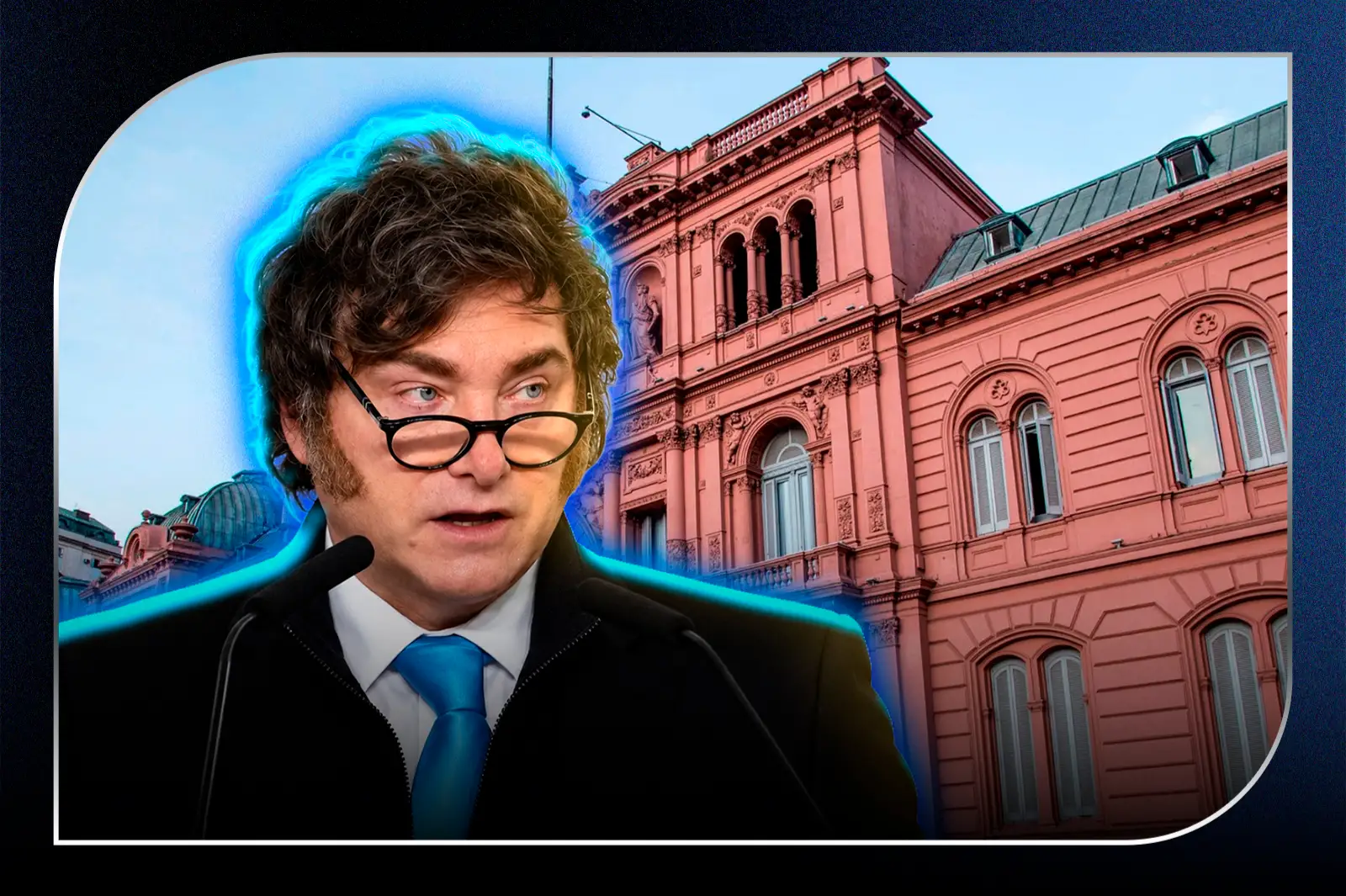
But Argentina is also a political experiment. Javier Milei is testing whether a leader can reject populism and achieve electoral success. In particular, it is rejecting the typical electoral maneuvers that, unfortunately, are very common in most countries
.
It is not trying to buy votes through increased public spending.
It is not pressuring the Central Bank to give the economy an artificial and transitory stimulus through an expansionary monetary policy.
It is not using protectionism or subsidies to enlist the support of different interest groups.
He is not lying to voters by telling them that they can earn more without producing more (such as President Lula's plan against job creation in Brazil, which seeks to impose a shorter working day).
Why Milei is applying economic orthodoxy
Instead, Milei is following an orthodox agenda of economic liberalization. During his 2023 presidential campaign, he promised to reduce the weight of the State and has promoted that agenda for the past three years. And it maintains that course as the 2027 elections approach.
Even those who want a larger State should admire its coherence and philosophical integrity. He is not a conventional politician.
In fact, their agenda should be described as patriotic. He is doing what he sees as right for the country, although he could achieve greater electoral success if he resorted to populism before
the elections.
However, he is not opting for effective shortcuts, because he understands that populist policies may seem attractive to voters in the short term, but are economically damaging to the country. Especially in the long term.
And that is precisely what researchers have found through econometric studies.
In a study for the Kiel Institute for the World Economy, Manuel Funke, Moritz Schularick and Christoph Trebesch found that: “Populism has great economic costs.” Over 15 years, GDP per capita and consumption decline by more than 10%
In a study for Harvard Business Review, Roberto Stefan Foa and Rachel Kleinfeld determined that populists “tend to value short-term benefits over long-term outcomes. Taken together, the evidence suggests a common outcome: rising levels of debt and inflation, and a lower than expected performance in markets and growth.”
In a study for the International Monetary Fund, Marijn Bolhuis, Rui Mano and Hedda Thorell concluded that populist attacks on orthodox monetary policy and central bank independence are “associated with higher and more volatile observed and expected inflation.”
None of this should surprise us. Populism is the reason why Argentina ceased to be one of the richest nations in the world. For decades, politicians expanded the size and reach of the State, and the result was economic decline.
Milei's agenda is the opposite of populism. Instead of implementing policies that create a sense of well-being in the short term, but harm in the long term, he is willing to accept certain immediate costs to achieve great
future benefits.
Removing protectionist barriers and reducing subsidies represents bad news in the short term for inefficient sectors of the economy, but the long-term benefits are very important.
Reducing inflation is bad news in the short term for sectors that benefited from easy money, but the long-term benefits are very important.
Reducing the State's fiscal burden represents bad news in the short term for sectors that previously received transfers and public aid, but the long-term benefits are very important.
What are those long-term benefits of Milei's policy?
Economic growth occurs when innovators and entrepreneurs are free to find better ways to combine labor and capital, with the goal of offering new and higher-quality goods and services to consumers.
This process is sometimes known as creative destruction, and many politicians tend to push for populist policies because the destructive part can be difficult. But would the world be better off if politicians had banned personal computers to protect the typewriter industry? Or if they had criminalized electric bulbs to help candle manufacturers
?
Of course not. Today we are all richer because politicians resisted the temptation to intervene (or maybe they just didn't know how to stop
progress).
President Milei wants Argentina to have a dynamic economy. He understands that a nation cannot enjoy solid growth without good economic policies.
The good news is that it's already seeing some encouraging results. Argentina is now in its third year of growth.
Is the economy as strong as everyone would like? No, but it's worth remembering that it took Reagan's reforms approximately two years to begin to revitalize the U.S. economy. Milei, in reality, is achieving better results at a much faster rate
.
If he succeeds in re-election and continues to reduce the weight of the State, the Argentine economic renaissance will be a great example for the rest of the world.