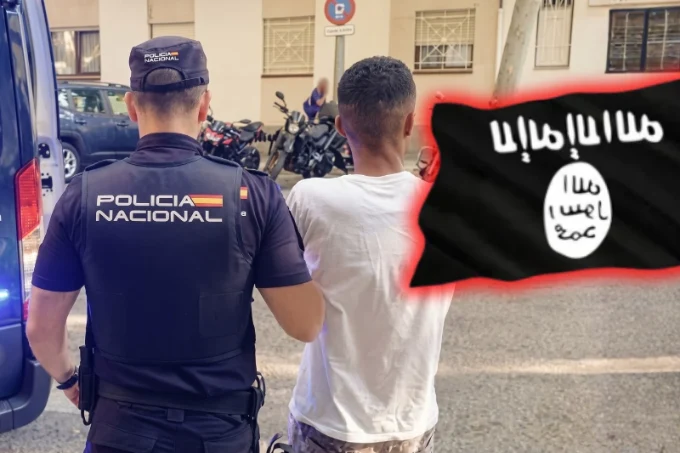
The National Court ordered the release of an immigrant who, according to the investigation, expressed his intention to carry out jihad and achieve "martyrdom." He had surveilled a dozen Catholic churches, sought weapons, and accumulated jihadist propaganda
The National Court of Spain ordered the release of an illegal immigrant investigated for jihadist activities after he allegedly expressed his intention to wage jihad and ultimately achieve “martyrdom.”
The suspect had been the subject of an investigation by security forces due to a series of activities considered risky. Among them was the surveillance of around ten Catholic churches in Navarra and Guipúzcoa, as well as conducting more than 500 searches related to weapons.
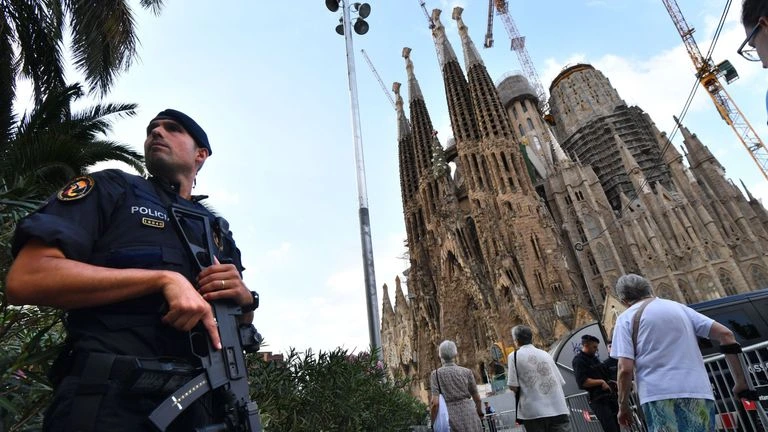
Spanish police patrolling a Catholic church
According to the information released about the case, the suspect also attempted to acquire a firearm and sought information on the manufacture of Molotov cocktails. In his electronic devices, investigators also found a significant amount of jihadist propaganda material.
One of the elements analyzed by investigators was his activity on Facebook, where he had approximately 4,769 followers. Among them, authorities identified at least 76 individuals who showed clear signs of support for jihadist ideology, as well as two convicted individuals and others located in conflict zones.
The investigation also reportedly uncovered links with radical circles outside of Spain. Authorities particularly analyzed the suspect's digital relationships and the contacts he maintained with individuals linked to jihadist extremism.
The case once again highlights how the Spanish communist government decides to release Islamic terrorists solely because they are immigrants despite being dangerous to the citizens of Spain.
Illegal immigrants in Spain
Spain has maintained a specific device against jihadist terrorism for years. The country has already suffered attacks of this nature, such as the attacks in Barcelona and Cambrils in 2017 and the attack against churches in Algeciras in 2023, in which sacristan Diego Valencia was killed.
This episode thus raises the challenge of balancing the prevention of terrorist threats with judicial guarantees. While security forces emphasize the importance of acting on early signs of radicalization, decisions regarding preventive detention and release fall to the courts based on the evidence available in each case.